AI Overviews: what the feature shows and where its sources come from
An AI Overview condenses several websites into one answer above the organic results. This post shows where its sources come from, what Google actually says about optimising for it, and why the circulating click-loss figures measure three different things.
An AI Overview is an automatically generated answer above the organic results. It summarises several websites and links some of them as sources.
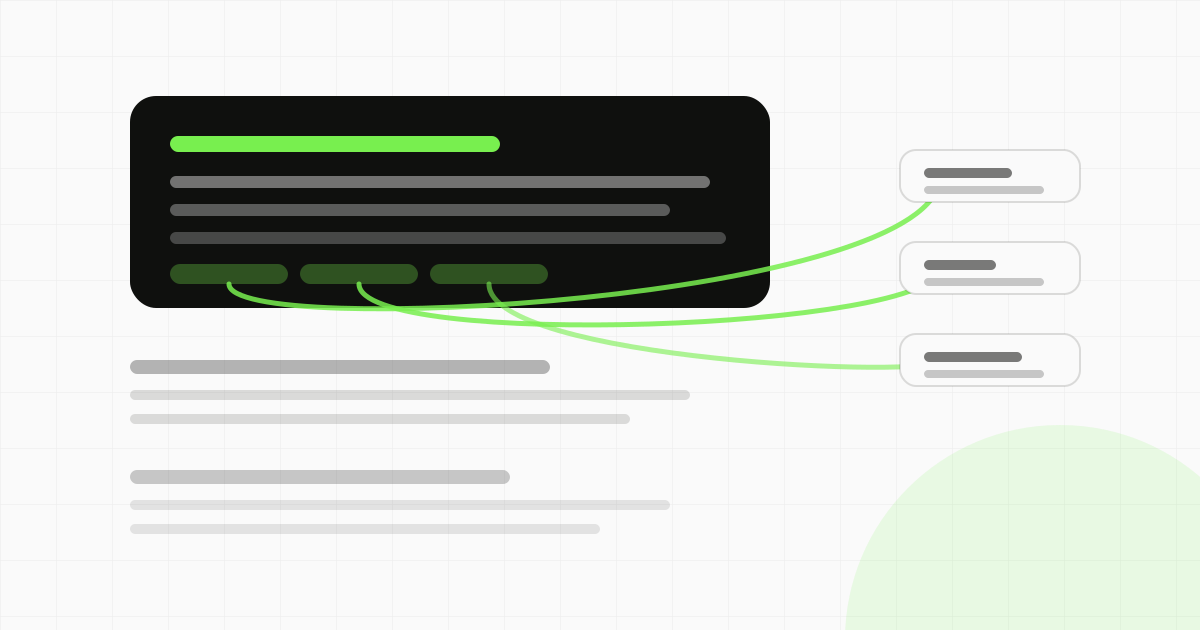
Where the answer box sits on the results page
The box stands above the first organic position. Source links sit next to the summary. The classic results remain below it.
Three Google Search features get confused here. A featured snippet shows an extract from one page. The Knowledge Graph delivers facts about entities. An AI Overview assembles text from several pages.
Search Generative Experience as the earlier name
Before the launch the feature ran as Search Generative Experience, short SGE. Older guides still carry the term.
A chatbot waits for input in its own window. An AI Overview appears in the search results unasked.
When an AI Overview appears and when it does not
Google publishes no rule for which query triggers the feature. Tool providers measure frequency against their own keyword sets, and the values sit far apart.
Why longer search queries produce more AI Overviews
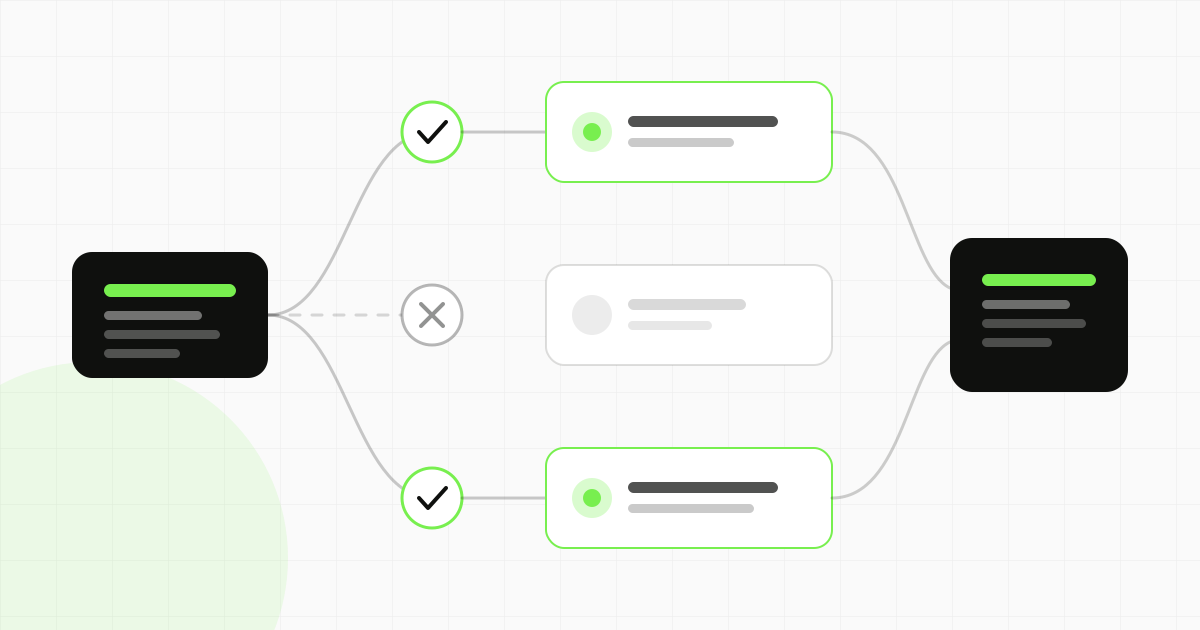
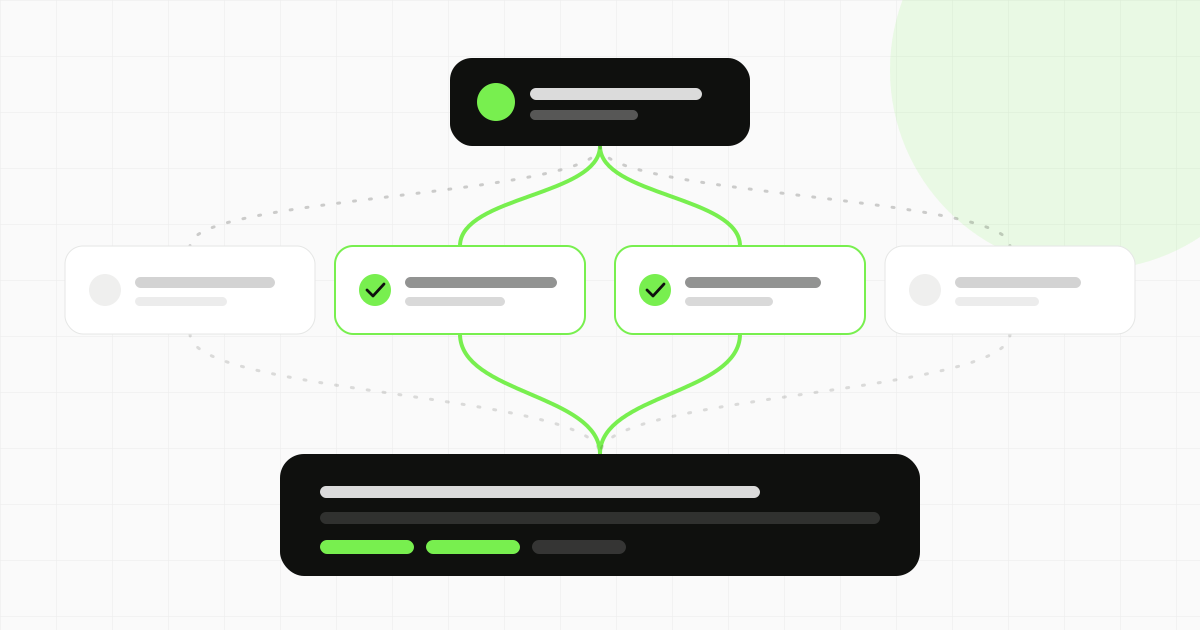
Google names the procedure in AI Features and Your Website as "query fan-out", described as "issuing multiple related searches across subtopics and data sources".
The selection of sources is not documented. Google publishes no weightings, no thresholds and no criteria at domain level.
Documented is the access condition. A page must be indexed and eligible to appear with a snippet. A top 10 position is not named there.
What Pew counted for Wikipedia, YouTube and Reddit
A widespread notion says AI Overviews favour forums and social media over normal search. Pew counted the sources of both formats.
Wikipedia, YouTube and Reddit supplied 15 per cent of the sources in the AI summaries. The same three supplied 17 per cent in the standard results.
The share is practically the same. A preference for user generated content does not follow.
What Google says about optimising for AI Overviews
The Google sentence on AI Overview requirements
The Search Central page on AI features carries the date 10 December 2025. The sentence reads: "There are no additional requirements to appear in AI Overviews or AI Mode, nor other special optimizations necessary."
Further technical requirements are not named there.
Four settings get named for this, and each does something different.
Setting
does
does not do
nosnippet
no text snippet anywhere
no deindexing
max-snippet
caps the content taken over
no ranking effect
data-nosnippet
excludes single page areas
structured data stays usable
Google-Extended
Gemini training and grounding
no exit from AI Overviews
The table places the four settings. A rebuild of your own website does not follow.
What Google-Extended controls and what it does not
The idea that a block for Google-Extended removes a website from AI Overviews runs through many English guides. The crawler documentation describes it differently.
Google-Extended controls training for future Gemini models and grounding in Gemini Apps and Vertex AI. On search the wording is: "Google-Extended does not impact a site's inclusion in Google Search nor is it used as a ranking signal in Google Search."
AI Overviews are not named there. For Google they belong to Google Search.
Not this: a block for Google-Extended takes the website out of AI Overviews.
Better: a block for Google-Extended keeps content out of the training of future Gemini models. In AI Overviews the page appears unchanged.
The Search Console control and its rollout
Since 3 June 2026 the Search Console carries a setting at property level. It excludes a website from AI Overviews, AI Mode and generative features in Discover.
The Google help page states the consequence. Sites that opt out receive no traffic and no impressions from those features.
Mrinalini Loew, General Manager Google Search Ecosystem, writes in the announcement: "We are beginning to roll these features out to a subset of website owners in the UK."
The control reaches British site owners first. Elsewhere it is unavailable in August 2026.
What each directive does. The last row is the one guides most often get wrong.
What the click loss figures measure
Figures on the effect of AI Overviews travel through many SEO posts. Three different quantities get swapped for one another.
Quantity
measured
example
Click rate of a results page
visits with a click on a classic result
Pew, US, 8 against 15 per cent
Click rate of one position
click rate at the same position
Ahrefs, 58 per cent lower
Traffic of a website
visitors arriving on a domain
projections from keyword databases
Pew measured the first quantity. About the traffic of a single website it says nothing.
The second was measured elsewhere, and the wording used for that finding was that the two correlate.
The third comes from projections out of keyword databases. That method and its limits are covered in the post on the visibility index.
Strategies built on a swapped metric move budget to the wrong place.
I have given up arguing about the size of the click loss. In almost every audit the number on the slide describes a results page, and the decision behind it concerns a website.
David Hahn, Managing Director, GetMentioned
Three attributions that do not survive a check
Three figures travel through posts about AI Overviews. Each comes from a source that says something else.
"Gartner predicts 25 per cent less organic traffic"
The forecast of 19 February 2024 refers to search engine volume, meaning the number of queries. Website traffic is a different quantity.
It is an analyst estimate without a collection period and without a sample. On 23 August 2026 gartner.com answered with status code 403, so no link is set here.
Reported correctly the statement reads: "Gartner expects search engine volume to drop by 25 per cent by 2026."
"Pew says AI Overviews halve the traffic of websites"
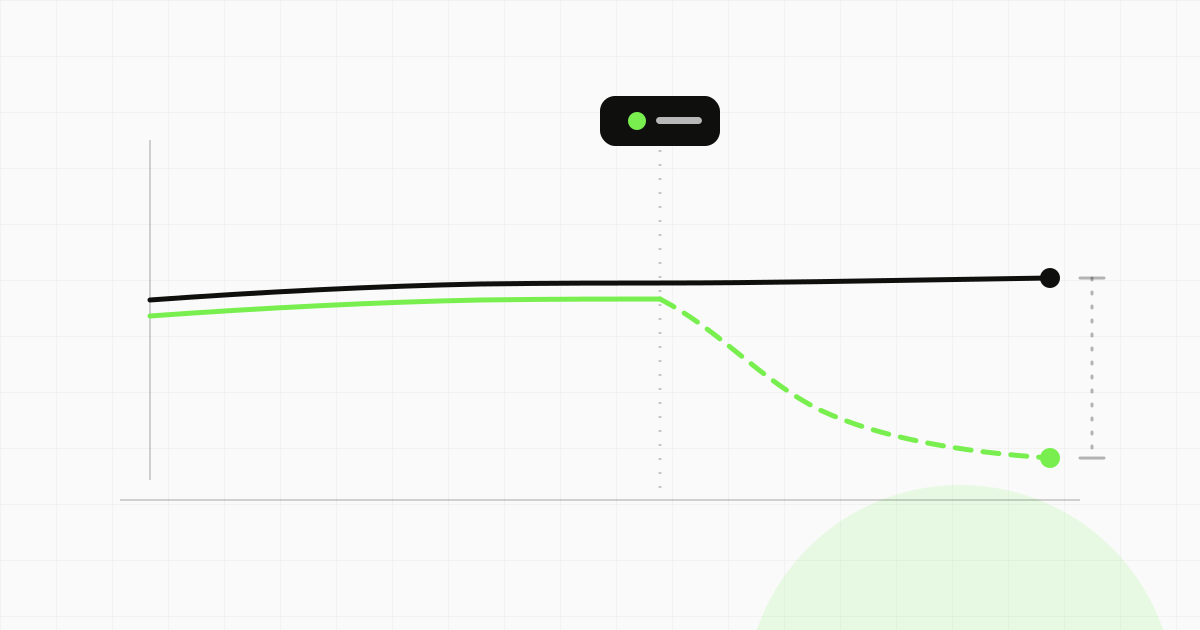
Pew measured visits with a click, 8 per cent with a summary against 15 per cent without. The comparison covers searches. No website is measured before and after the launch. Pew claims no cause.
Reported correctly the statement reads: "In searches with an AI Overview, users in Pew's US panel click a classic search result about half as often."
"HubSpot lost 80 per cent of its blog traffic to AI Overviews"
The company has contradicted that account itself. The figure going around comes from a third party tool estimate rather than from its own data, and HubSpot names a strategy change of its own from 2020 as the first of three causes.
What is documented for brand visibility
An AI Overview draws its sources from the ranking systems of Google Search. Google calls the procedure retrieval augmented generation.
A plain condition follows. What is indexed and eligible for a snippet comes into question as a source.
Editorial articles in trade media meet that condition. A brand appearing there with its topic sits inside the pages an answer is built from.
Where Google draws the line on mentions
Google comments on mentions in the same guide. The sentence reads: "Seeking inauthentic 'mentions' across the web isn't as helpful as it might seem. Our core ranking systems focus on high-quality content while other systems block spam; our generative AI features depend on both."
The marker in that sentence is the word inauthentic. It describes mentions produced for machine evaluation alone.
Not this: the same text block on two hundred domains without readers, with the same anchor text every time.
Better: a trade article at a publisher with its own audience, on a topic the brand can contribute to, and worth reading without the mention.
No survey with disclosed methodology measures a connection between brand mentions and citation probability in AI Overviews. Anyone promising such a mention holds no evidence for it.
Who arranges mentions in trade media
GetMentioned is an SEO platform with its own placement marketplace: analysis, content and placements for backlinks, brand mentions and digital PR in one system. Full service in link building, not full-service SEO. We find the publishers, check them and publish where a brand's topic belongs.
In our experience this pays off for brands that barely appear on their own topics outside their own domain.
Anyone who wants to appear in trade media sees topic, organic traffic, SEO data and price per placement with us before booking.
Conclusion: the feature first, the figure second
An AI Overview is an answer box above the results, fed from the ranking systems of Google Search. Google names no additional requirements for it.
Google-Extended takes no website out of the feature, and the Search Console control still goes to a subset of UK site owners.
The click loss figures measure three different things. Separating them leads to different decisions than the posts that mix them.
Frequently asked questions
What is an AI Overview?
An AI Overview is a summary generated by Google above the organic results. It links some of the websites it used.
How many searches produce an AI Overview?
Pew measured 18 per cent for the United States in March 2025. Sistrix reports around 17 per cent for Germany in August 2026, without disclosing methodology.
What is the difference between AI Overviews and AI Mode?
An AI Overview appears on its own in the result list. AI Mode is chosen by the user.
Can AI Overviews be switched off?
Google has offered a Search Console control since June 2026. It is going to a subset of website owners in the UK.
Does Google-Extended take a website out of AI Overviews?
Google-Extended controls training and grounding for Gemini. On inclusion in Google Search it has no influence according to Google.
Is structured data needed for AI Overviews?
Google writes that structured data is not required for generative AI search. No special schema.org markup exists for it.
Does a page have to rank in the top 10 to be cited?
Google names indexing and snippet eligibility as the condition. A top 10 position is not part of it.
David has been building link acquisition and digital PR processes since 2016, first as an agency under SEO Galaxy, today as a platform with GetMentioned. He has scaled his own projects from zero to seven-figure monthly traffic and delivered thousands of campaigns for clients. Here he writes about what works in practice, and about what only costs budget.
Your next link does not have to be a blind buy
Compare publishers, SEO data and prices in one place and book the placements that fit.
Every AI system runs its own crawlers, and each has a different job. Why the widely repeated advice about Google-Extended does not work, and what Google and Microsoft actually ask for.
The visibility index sums up a domain's Google rankings, weighted by search volume and click probability. What the number says, why it is a zero-sum game and what it stopped showing once AI Overviews arrived.
GEO targets being named in an AI answer rather than a position in the list of results. What is evidenced, which levers work and what the circulating figures are worth.