Building a digital PR strategy: how authority becomes plannable
Strong content, flat rankings: usually what is missing is not the next idea but a process. Four phases from goals through linkable assets to KPIs, with the to-dos for each step.
When your content is strong but the rankings sit still, what is usually missing is not another idea but a digital PR strategy. What is missing is visibility in relevant media, real media presence, and signals like brand mentions and backlinks that build trust.
Digital PR, to us, is not classic public relations in the sense of sending out a press release and hoping something happens. It is a plannable process that connects SEO, brand building and distribution, steered against defined goals and KPIs.
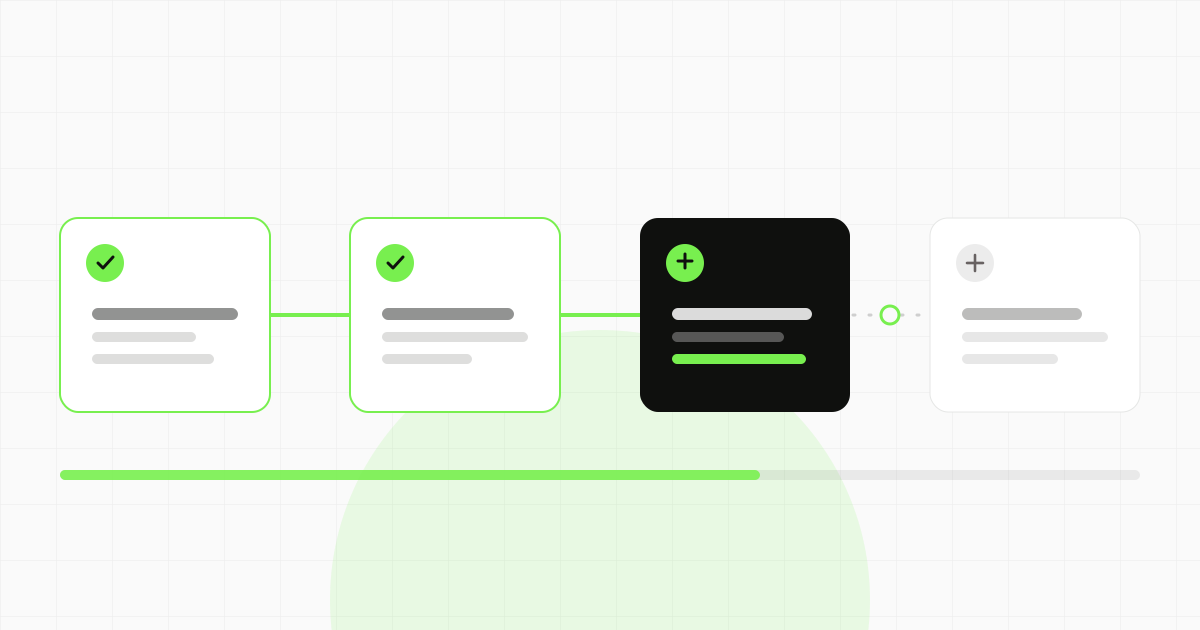
This guide walks through the four phases we use to set up campaigns: goals and setup, topics and assets, distribution and outreach, measurement and iteration. Each step comes with the to-dos we actually start from.
Phase 1: set goals and setup
The point of this phase is a setup that makes digital PR repeatable: clear goals, clear roles, clear rules. Without it every campaign stays a one-off you cannot compare against the next one.
Define goals: what should digital PR deliver?
A digital PR strategy needs a measurable target. That can be a ranking lift for specific pages, more brand search, a market entry, or leads through media. What matters is that the goal translates into a number later on.
In our experience this is exactly where comparison between two campaigns breaks down: write "more visibility" as your goal and you will not be able to say afterwards which of the two performed better.
Set one or two primary goals and one secondary goal (low effort, quick effect)
Define target pages and topic clusters (medium effort, mid-term effect)
Fix owners, approvals and cadence (medium effort, long-term effect)
Audiences and channels: who do you want to reach, and where?
Many approaches fail on audiences defined too loosely. Beyond your customers you need the multipliers: journalists, bloggers, podcasters and newsletter editors. They decide whether your story happens at all.
The channels follow from that: trade media, business portals, niche blogs, regional publishers, podcasts and LinkedIn formats. Online PR only becomes efficient once channel and format match.
Build three audience clusters and matching media clusters (low effort, quick effect)
Prioritise 10 to 30 relevant outlets per cluster (medium effort, mid-term effect)
Write a messaging guide for the brand and its spokespeople (medium effort, long-term effect)
Link targets: which pages should get stronger?
Without link targets the strategy stays vague. You need to know which pages should gain and which placement types give you the most leverage. So we plan link targets (hub, category, money page, asset), quality criteria (relevance, context, placement) and referral traffic potential separately.
Which topical settings you are missing against the competition can be measured rather than guessed. MentionIQ compares your website, your competitors and your most important keywords and shows which link sources and placements are still open. Competitors here are not only your direct business rivals, but every website visible for your keywords.
Prioritise five to ten target pages and derive topics for them (medium effort, mid-term effect)
Define quality criteria for placements (low effort, mid-term effect)
Set link target and tracking parameters per campaign (low effort, quick effect)
Phase 2: develop topics and assets
This is where the material media actually want to use gets made. It comes down to being quotable, to a solid data base, and to a clear brand message. Effort peaks here; so does how long the effect lasts.
Finding topics: data, relevance and competition
Good topics do not come from gut feeling. They come from combining keyword and SERP analysis with competitor observation, insights from sales, and trend data.
In practice we see authority build where a brand shows up in the same topic cluster month after month. One-off appearances in unrelated topics buy reach briefly and little else.
Define three topic clusters and collect ten story angles each (medium effort, mid-term effect)
Check the competition: who dominates mentions and links? (medium effort, mid-term effect)
Set an editorial plan for six to twelve weeks (medium effort, long-term effect)
Linkable assets: data-driven content and visuals
Linkable assets are the lever digital PR scales on: studies, benchmarks, tools, rankings, data sets and infographics. They give media a reason to quote you rather than merely write about you.
In our experience what decides it is how usable the asset is for an editor: clear charts, numbers that hold up, sharp key statements and quotable expert commentary. The less work an asset creates for the newsroom, the more often it gets picked up.
Pick one asset format, for example a report or a calculator (medium effort, mid-term effect)
Produce data, visuals and landing page as one package (high effort, long-term effect)
Prepare quote blocks and small angles per outlet (medium effort, quick effect)
Brand message: consistency beats volume
How credible a brand looks rests on consistent positioning. From years of doing this we know: journalists look you and your brand up before they quote you. What they find weighs in.
Authority rarely comes out of one campaign. It comes out of many small ones over months. Knowing what you will talk about in the third quarter is what makes it plannable.
David Hahn, Managing Director, GetMentioned
So spokesperson profiles, the about page, key messages and references belong before the first campaign, not after it. That is the trust base every later placement sits on.
Define three key messages and the evidence behind them (low effort, quick effect)
Update spokesperson profiles and author pages (medium effort, mid-term effect)
Give partners and publishers rules for brand mentions (low effort, mid-term effect)
Phase 3: distribution and outreach
Now the assets have to reach the right media. Distribution is what turns content into brand presence. It is also where you find out whether the work from phases 1 and 2 held.
Media plan: formats, timing and repetition
Every channel needs its own logic. The questions worth settling before anything goes out:
Which outlets get exclusivity, which get broad seeding?
Which format fits: interview, guest post, data story or advertorial?
When does the follow-up go out, and with what added value?
Who approves, and how quickly?
A workable communication set is pitch, snippets, visuals and a follow-up plan. Leave one of them out and the chain usually breaks at exactly that point.
Segment media into three to five clusters, one format each (medium effort, mid-term effect)
Set timing rules for exclusivity and follow-up windows (low effort, quick effect)
Prepare the approval process and a question-and-answer document (medium effort, mid-term effect)
Two routes into the newsroom, and what each costs
One route is pitching yourself. It needs a curated list, a hook the newsroom cares about, and patience. In our experience a small maintained list beats ten times the contacts, because a generic press list scales emails and not relationships. The price is time in the team, and even then the date is never fixed.
The other route is the booked placement. There the publisher, the context, the date and the price are settled before you commit. For a campaign with a date in the calendar that is the predictable route, and for most teams the cheaper one once their own hours are counted in.
The placement side runs in parallel. Publishers you cannot reach through the newsroom you book directly: in GetMentioned as a placement marketplace you select suitable publishers, compare SEO data and prices, and document the publications in one place. So the choice does not rest on instinct, the GetMentioned Score pulls price, SEO values, authority and likely effect per publisher into one assessment.
Define the contexts the story belongs in (low effort, quick effect)
Decide per context whether you pitch it or book it (low effort, quick effect)
For the booked part, select publishers on relevance, SEO data and price (low effort, quick effect)
For the pitched part, name a time window and an owner in the team (medium effort, mid-term effect)
Phase 4: measure and iterate
Digital PR only becomes steerable with clear metrics and regular monitoring. Without the review you do not know which measure built authority and which only cost budget.
Monitoring: from campaigns to a learning system
We separate three levels. Output is what got produced and sent. Outcome is mentions and earned links. Impact is rankings, visibility in AI answers, leads and revenue. Mix the three and a successful send starts to look like a successful month.
Create a campaign review template (low effort, quick effect)
Build an overview of mentions, links, traffic and rankings (medium effort, long-term effect)
Clean the media list by performance every quarter (low effort, mid-term effect)
The four KPIs you need at minimum
These four belong in every report: mentions with and without a link, including those in AI answers. Earned links by quality, relevance and target page. Referral traffic by sessions and leads. And share of voice inside your topic clusters.
Where the data comes from and what you read out of it should be settled upfront: mentions and share of voice from monitoring, links from backlink tools, traffic and leads from analytics and CRM. What you derive is which clusters to expand and which to drop.
Set a monthly KPI routine (low effort, quick effect)
Evaluate link quality and the effect on target pages (medium effort, mid-term effect)
Compare share of voice against competitors (medium effort, long-term effect)
Tools for digital PR, outreach and monitoring
No single tool covers everything. What works is a combination that fits your use case. We use the following ourselves or see them regularly on client side.
Tool
Focus
Strengths
Limits
GetMentioned
Placement marketplace
Publishers comparable by SEO data and price, placements bookable directly, publications documented
Built for placements and link building, not general media monitoring
Meltwater
Media monitoring
Large media database, strong monitoring, crisis communication
Expensive, complex to operate, weighted towards monitoring over placement
Cision
PR distribution and database
Very large journalist database, established distribution
High cost, contact data goes stale without active upkeep
Ahrefs / Semrush
SEO and backlink analysis
Strong analysis of earned links, ranking and traffic tracking
No outreach, no journalist database
HARO / Connectively
Sourcing
Direct access to journalist requests
Reactive: you wait for requests instead of placing yourself
In closing: digital PR as a plannable process
A digital PR strategy works when it is a process rather than a collection of actions: setup and goals first, then assets, then distribution and outreach, then measure and sharpen. In our experience the most common mistake is not the wrong story but skipping phase 1, because it does not feel like progress.
Anyone who wants to be named in the media of their own topic and cited as a source in AI answers needs regular placements. In GetMentioned you select suitable publishers, compare SEO data and prices, book placements and document publications in one place. Create your free account.
Common questions about digital PR strategy
How exactly does GetMentioned help with a digital PR strategy?
As a placement marketplace, GetMentioned covers the placement side: you select suitable publishers, compare SEO data and prices, book placements directly and document the publications in one place. The strategy and the story stay with you.
How quickly does a digital PR strategy show an effect?
Mentions and first publications are often possible within two to six weeks. Ranking effects usually need three to six months, longer in contested markets.
Do I need a budget to start with digital PR?
Starting small works if you have time and focus. In our experience scaling needs budget and repeatable processes, especially for data-driven assets and their distribution.
Which KPIs should I track regularly?
At minimum mentions, earned links by linking domain and relevance, referral traffic and share of voice. Alongside that, how your target keywords and target pages develop.
How does digital PR differ from classic public relations?
Classic PR aims mostly at reach and image. Digital PR connects that with SEO effect: links, topical authority, measurable traffic and reporting that rests on numbers.
What makes an effective linkable asset?
Studies, benchmarks, calculators, rankings and visuals. It gets cost-efficient when you build on data you already have and refresh the formats regularly instead of starting from zero each time.
What role do social networks play?
Platforms like LinkedIn extend the reach of a placement and are where you engage with stakeholders. They do not replace media work, they extend it.
How important is your own online reputation?
It is the precondition. Journalists check brand presence before they report. Clean profiles and consistent messaging help decide whether a request gets answered at all.
Where does MentionIQ fit into the strategy?
In phase 1, with the link targets. MentionIQ compares your website against competitors and your most important keywords and shows which link sources and topical settings are still open. From that you derive what the campaigns should feed.
David has been building link acquisition and digital PR processes since 2016, first as an agency under SEO Galaxy, today as a platform with GetMentioned. He has scaled his own projects from zero to seven-figure monthly traffic and delivered thousands of campaigns for clients. Here he writes about what works in practice, and about what only costs budget.
Your next link does not have to be a blind buy
Compare publishers, SEO data and prices in one place and book the placements that fit.
AI answers recommend providers before anyone clicks a ranking. How to measure AI visibility, which signals carry it, and where the external evidence models lean on comes from.
You pay for publication, but what counts is the page being in the index. How to sample a publisher's indexing reliability before booking, how long inclusion takes, and what to do when a placement never makes it in.
Tier 2 and tier 3 pass nothing on unless their own pages are indexed, and across three levels those failures multiply. Two worked examples show what reaches your own domain, what one surviving reference costs and why a single checked placement gets there in one step.