Link building with content: from asset to first link
Content does not create links, it creates reasons to link. Which six formats supply one, where each stops working, and what happens between the finished asset and the first link. That is where almost every guide ends.
Link building with content means earning backlinks through material other websites point to.
The term promises an automatic effect that does not exist.
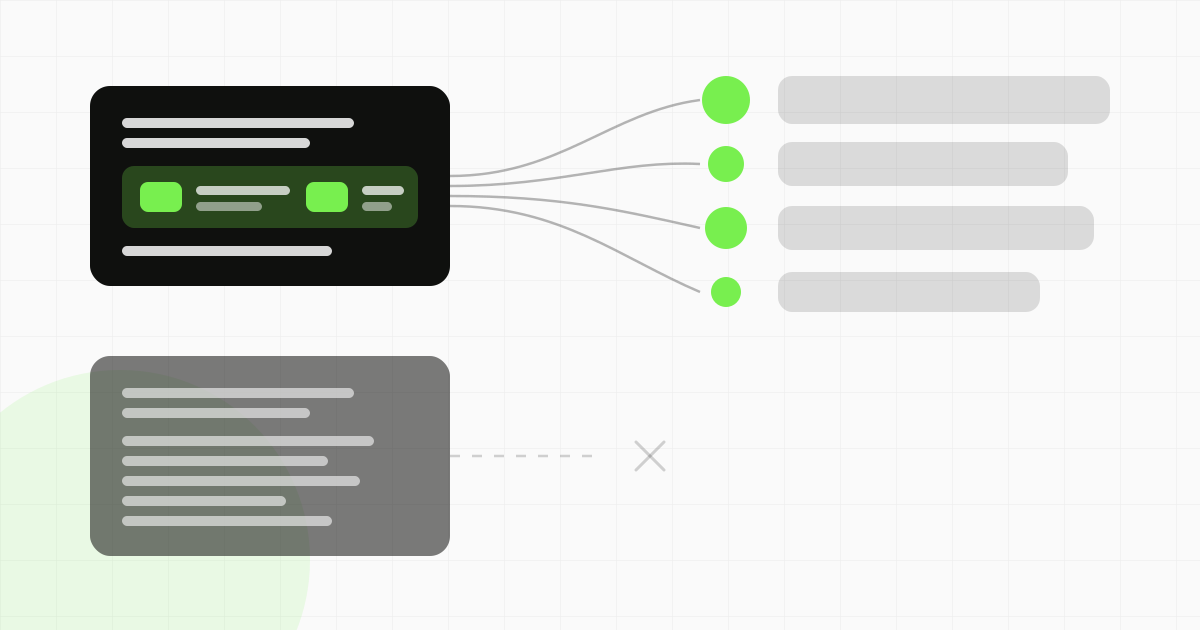
Content does not produce links. Content produces reasons to link.
A reason to link is the sentence an outside writer can put around your work. It reads like "An analysis of 1,200 placements puts the median at 240 euros".
Without that sentence the page is one of many. The base requirement is material that can be pointed at.
Most guides write straight past this distinction. It decides which format is worth building.
Content marketing addresses your audience, meaning future customers. Link building with content addresses editors, blogs and trade media, meaning future linking sites.
As a component of off-page optimisation it sits next to digital PR and guest posts. The groundwork for this part of search engine optimisation is in the link building guide.
This article answers the execution question for SEO and marketing teams that publish and see no links coming back. Which format supplies which reason, and how does the first link happen?
How to recognise a reason to link
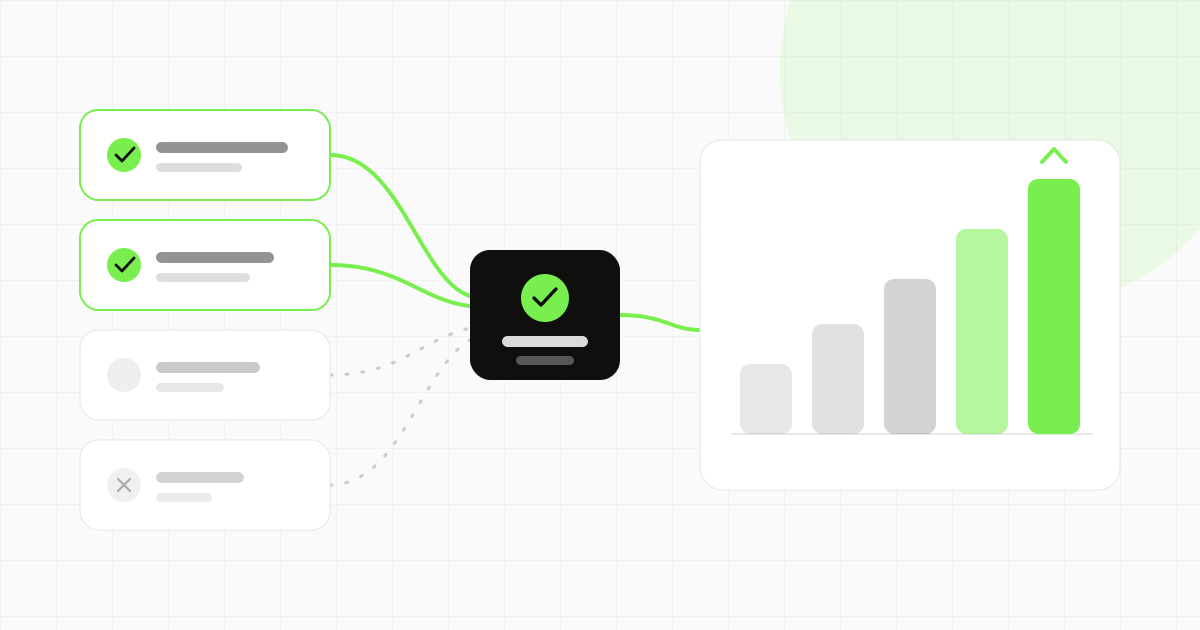
A reason to link can be tested before production. Five questions do it.
Five checks before content creation
Does it hold a figure that exists nowhere else on the internet?
Can that figure be quoted in one sentence, without reading the post?
Will it stay valid for a year?
Does a user reach it without signup, form or paywall?
Can an outside writer cite it without naming your product?
Five yes answers mean a solid reason to link. A no on the first means the format adds nothing new.
In our experience the fourth breaks most often. Gated content produces leads. Links it does not produce.
What is not a reason to link
Four formats show up in almost every link building strategy and supply none:
a guide with the same ten points as the top search results
e books behind a form
a product page with prices
a post about the company history
Every one of them has a better version.
Instead of the tenth guide, an analysis of the ten that exist, naming their contradictions.
Instead of the e books behind a form, the same numbers on an open page. The form stays for the PDF.
Instead of the product page, a price overview for the market, your offer as one row. Instead of the company history, an analysis of your project data, with period and sample size.
Which content formats supply which reason to link
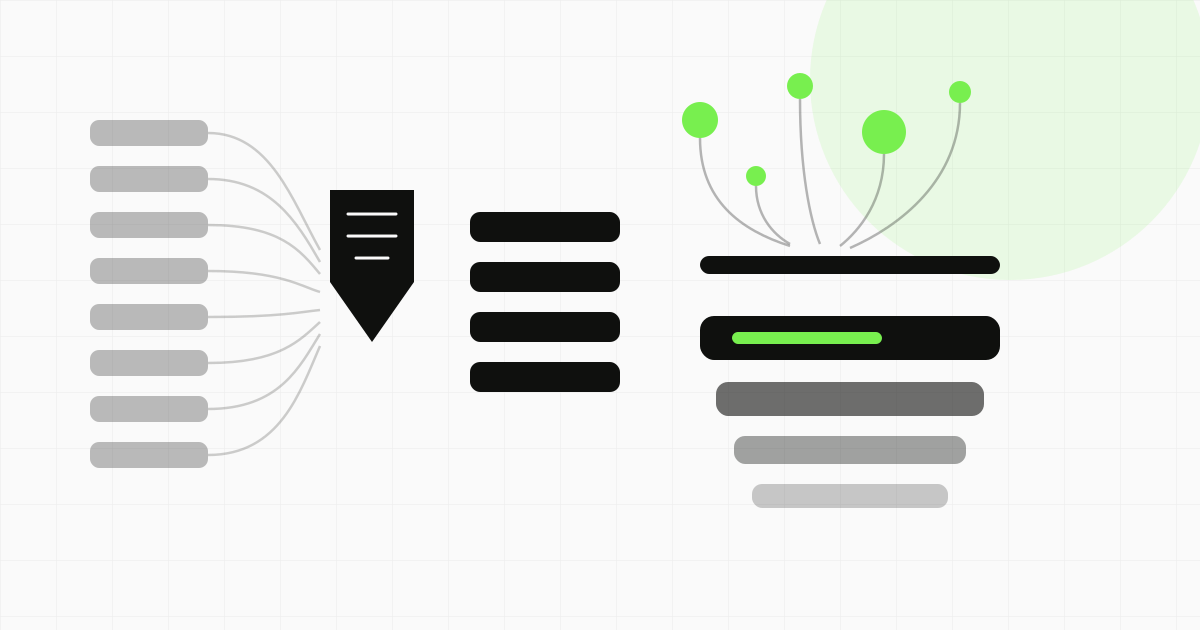
Six formats supply a reason to link. Material of this kind is called a linkable asset. It falls into three categories. Data, applications and framing.
Format
Why someone links
Limit
Original survey
the figure exists nowhere else
high effort, and it ages
Analysis of outside data
someone did the collecting
the original source often gets named too
Industry benchmark
readers want to place themselves
needs ongoing upkeep
Calculator or free tool
it removes a calculation
build and maintenance
Comprehensive reference post
it answers a question in one place
hundreds offer the same
Infographic or visualisation
it can be reused
without own figures it stays decoration
Original surveys
An original survey turns quotable only with disclosed methodology. That means period, sample size and method.
At GetMentioned that would be an analysis of the placements closed in one quarter.
The limit is effort. A survey ties up working time and ages.
Analyses of outside data
An analysis collects existing figures and orders them. The reason to link sits in the collecting.
The limit shows in the anchor text. Whoever quotes it usually names the original source too.
Benchmarks for your own industry
A benchmark supplies values others measure themselves against. People link to it because readers want to know where they stand.
The limit is upkeep. Last season's benchmark gets replaced.
Calculators and free tools
Calculators and tools solve concrete problems. People link to them because the pointer saves work.
The limit is the build and the maintenance.
The value has to land without signup. A tool behind a registration rarely earns a recommendation.
Comprehensive reference posts
A reference post answers a question in one place and covers many search queries. People link to it as evidence when a writer touches a topic in passing.
The limit is volume. Every common topic carries hundreds of such articles.
It holds up only with a part the others lack. Own figures, own experience or a model that orders a decision.
Infographics and visualisations
An infographic makes data reusable. People link to it because a writer can embed it and credit the source.
The limit is the content. Without own figures an infographic stays decoration.
Whether the caption turns into a backlink with weight depends on the link attribute.
Six formats, each with the reason somebody links and the point at which the format stops working.
Why a finished asset alone brings no links
This is where almost every guide stops. The asset is live, the rest counts as done.
Between publication and the first link sits a separate job. The role of the asset does not end at launch.
What happens between publication and the first link
Four things line up before anyone links:
An outside writer is working on a text about this topic.
They want evidence for a claim in it.
They find your website, through search, social media, a newsletter or a direct approach.
They consider the source quotable enough to name.
Points one and two sit outside your influence. Point four rests on domain, author and presentation.
Point three is the only one you steer. That is where an asset earns links or does not.
How to see the gap on your own site
The gap can be measured. Three values do it:
referring domains to the asset URL, three months after publication
the ratio of page views to referring domains
the share of links from your own orbit
You read these in Google Search Console and in SEO tools. Success shows in the first value, and at zero there is no route to a reader.
In practice we see this at almost every content audit. The assets are there, and nobody outside the company knows them.
No newer study with disclosed methodology exists. As a current measurement the figure is useless, as a description of the evidence it holds.
The three routes from publication to first link
Three routes cross the gap.
Route
What it costs
When it works
Waiting
nothing but time
when the domain is already visible in its topic
Pitching yourself
working time, about a day per placement
for a few well chosen targets
Booking a placement
a fixed price per publisher
when one specific landing page needs links
Waiting
Waiting means someone finds you through search and links on their own. Website owners with an established domain do earn links that way.
On a new domain the route goes nowhere, because the page barely surfaces in search results. Links then happen by accident.
Pitching yourself
The second route has you contacting editors, bloggers and website owners. It costs no money and much working time.
An accepted trade article costs about one working day in our experience, from research to sign-off.
At volume it hits a wall, because every approach is built one at a time.
Which free sources hold up is covered in free backlinks. Anyone booking through a marketplace runs none of this outreach.
Booking a placement
The third route puts the placement where your audience already reads. The reason to link travels from the asset into an editorial post at the publisher.
The date is fixed in advance, so is the price.
At GetMentioned you see topic, organic traffic, SEO data, GetMentioned Score and price for each publisher before you book. The price you see in the marketplace is the price you pay.
Teams that want to hand the build over get it from us as a managed service. That is full service in link acquisition, not full-service SEO on your site.
Paid placements are widely treated as risky. That reading falls short, and the fact check below shows why.
Most teams published their best asset long ago. It sits on page four of their own sitemap, and nobody outside the company has ever seen it.
David Hahn, Managing Director, GetMentioned
Why a few fitting links move more than many random ones
Plenty of backlinks from unrelated environments barely change how a page is assessed.
The weight of a link depends on the page carrying it. How that weight travels is explained in link juice.
Ten fitting links work harder than a thousand random ones.
Which criteria make a linking site worth it
topical relevance between publisher and asset
real organic traffic on the domain
editorial placement in body text, not a link list
an anchor text that describes the asset
a publisher link profile without odd patterns
They apply to booked and organic links alike. Links from spam sites add nothing and stand out in a link profile.
Five claims about link building with content, checked
Sentences circulate here that read well and hold up badly. Two concern Google penalties. "Google penalises sites that buy unnatural backlinks" and "Google penalises unnaturally grown link profiles" were checked against the spam policies in content vs backlinks. Both are too sweeping.
Five more sit here.
"18 strategies help with fair link building"
The number has no source. It comes from a listicle headline and travels on through further lists.
No study counts link building methods and arrives at 18. The useful question is which method fits which goal.
"Directory listings deliver valuable backlinks"
Google names directories explicitly as an example of link spam.
The spam policies carry the bullet "Low-quality directory or bookmark site links".
The marker is the quality of the directory. An edited industry directory with real users holds up, a bulk directory does not.
"Slow link growth rates look more trustworthy to Google"
There is no Google source for it.
The words velocity, speed and link growth never appear in the spam policies.
The policy describes link spam by the purpose of a link. Naturalness is not a metric Google publishes.
Patterns are what stands out. A hundred links from one link farm are visible whatever period they arrive in.
"Studies and original data attract links from journalists"
The first half holds up. The second does not.
Cision surveyed 1,899 media professionals in 19 markets in January and February 2026 for the State of the Media Report 2026. The sample comes from the provider's own database.
Asked what PR contacts should send more of, "Data or research" comes first at 47 per cent. Press releases land at 22 per cent. Respondents could pick more than one answer, so the figures rank the options rather than split them.
Whether a journalist then links the source is not measured. The words hyperlink, backlink and attribution appear nowhere in its 30 pages.
Use often turns into a mention without a link. Language models count that, a link profile does not.
"Free tools offer high practical value and attract links"
The first half is plausible. The second is unproven.
The last analysis that sets content formats against each other dates from 2019. It compares list posts, why posts, what posts, how-to posts, infographics and videos. Tools and calculators are not a category in it.
A selection effect is visible. Calculators with links become known, the many without appear in no list.
Claim
Verdict
18 strategies help with fair link building
fails, the number comes from a listicle headline
Directory listings deliver valuable backlinks
holds only for directories with editors and real users
Slow link growth looks more trustworthy
fails, Google names no pace as a marker
Original data attracts links from journalists
half holds, use is documented and the link is not
Free tools attract links
fails, no study measures it
Which landing pages make link building with content worthwhile
Not every page needs backlinks.
The effort pays off where revenue, ranking potential and a link profile gap meet. Typical cases:
A landing page has sat at position 6 to 20 for months.
Competitors with thinner text stand ahead of it.
A new topic cluster needs authority in its field.
The brand is absent from AI answers on its own topics.
The team published three assets and measured no links.
For SEO teams the point is control over the landing page. For marketing leads it is whether the build turns plannable.
MentionIQ derives the fitting publishers from your website, competitors and keywords. On pages without revenue relevance the budget is better spent elsewhere.
Conclusion: the reason to link first, the route to the reader second
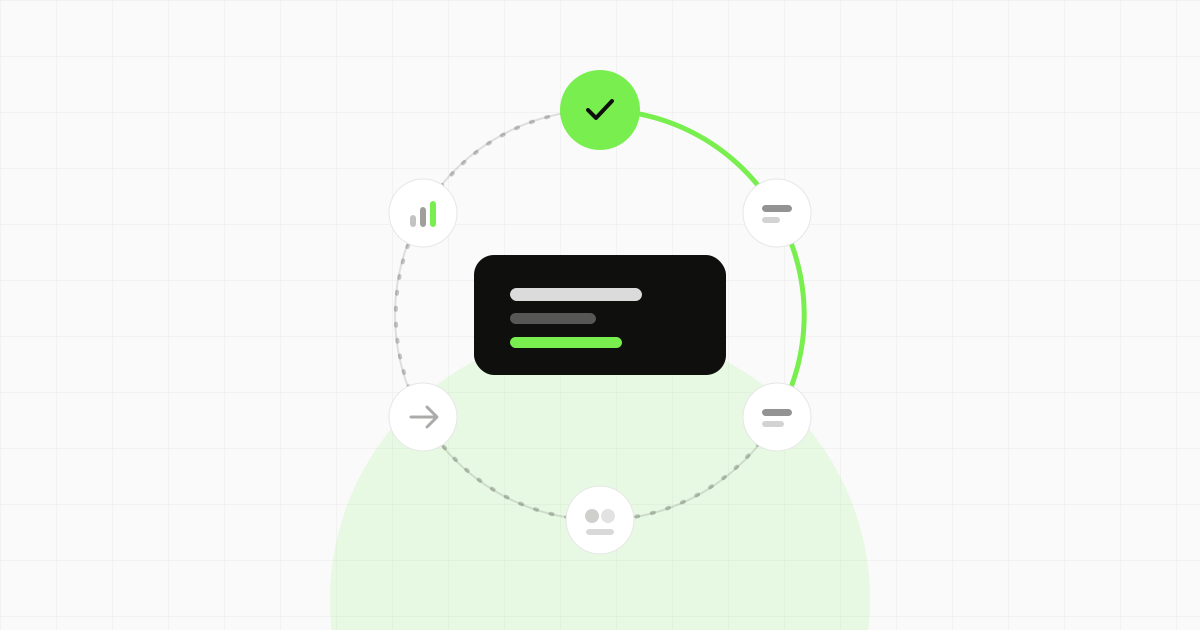
Link building with content consists of two jobs. The first is the reason to link, the second is the route to the reader.
Six formats solve the first, each with its own limit.
No format solves the second, and it decides the outcome.
Frequently asked questions
What is link building with content?
Link building with content is earning backlinks through material that other sites point to. The material supplies the reason. The link does not follow by itself.
Which content formats bring the most backlinks?
No documented ranking exists. Original surveys, analyses, benchmarks, calculators, reference posts and infographics with own figures supply a reason.
How long until an asset earns links?
Without a pitch and without a booking the timing stays open. With a booked placement the date is fixed in advance.
Is good content enough for good rankings?
In low-competition topics often yes. Once several fitting pages compete for one position, links from outside decide as well.
Do nofollow links count in link building with content?
Nofollow links pass no weight. They bring traffic, visibility and a mention that language models pick up.
How many backlinks does an asset need?
No general number exists. The reference point is the referring domains of the pages ahead of you.
What does link building with content cost?
Production costs working time. A booked placement costs a fixed price per publisher, shown before you book.
David has been building link acquisition and digital PR processes since 2016, first as an agency under SEO Galaxy, today as a platform with GetMentioned. He has scaled his own projects from zero to seven-figure monthly traffic and delivered thousands of campaigns for clients. Here he writes about what works in practice, and about what only costs budget.
Your next link does not have to be a blind buy
Compare publishers, SEO data and prices in one place and book the placements that fit.
How search engines and AI systems weigh links, which methods exist, what link building costs and how paid placements should be judged. The overview, with pointers into the detail.
Content decides whether a page enters the running. Links decide which of the qualifying pages ranks first. How to tell which half you are missing, with the median figures from the last Semrush study and five common claims checked.
Link building rarely fails on method, it fails on missing prioritisation. Nine steps from analysis through target pages, assets and publishers to measurement, with a scorecard, a 90-day roadmap and a KPI set.