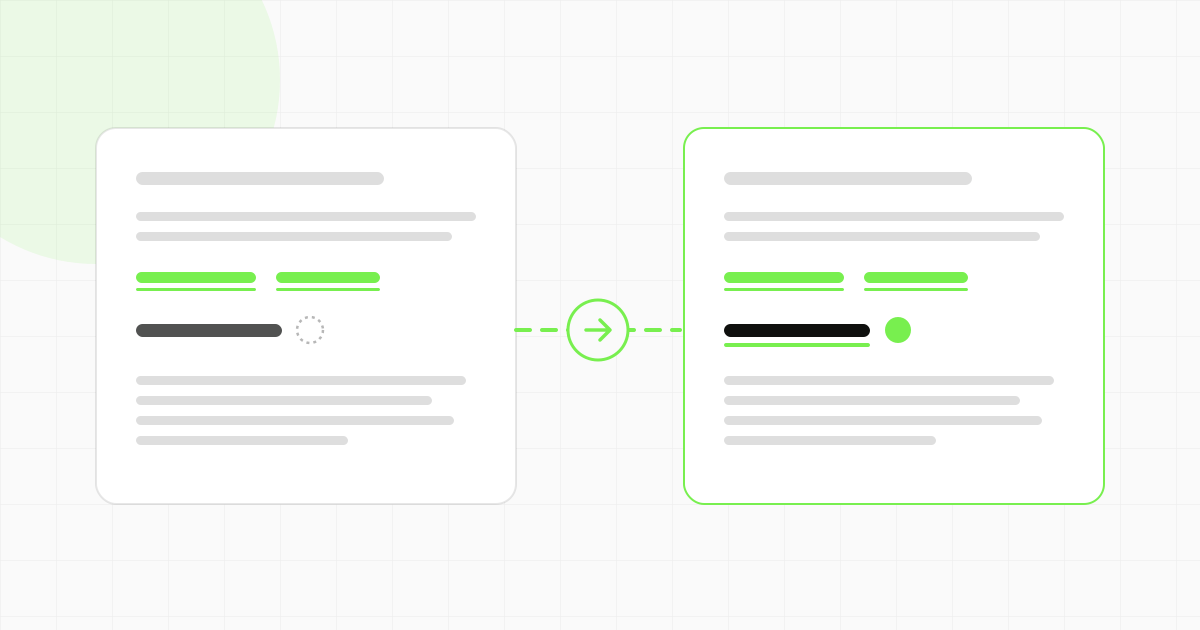
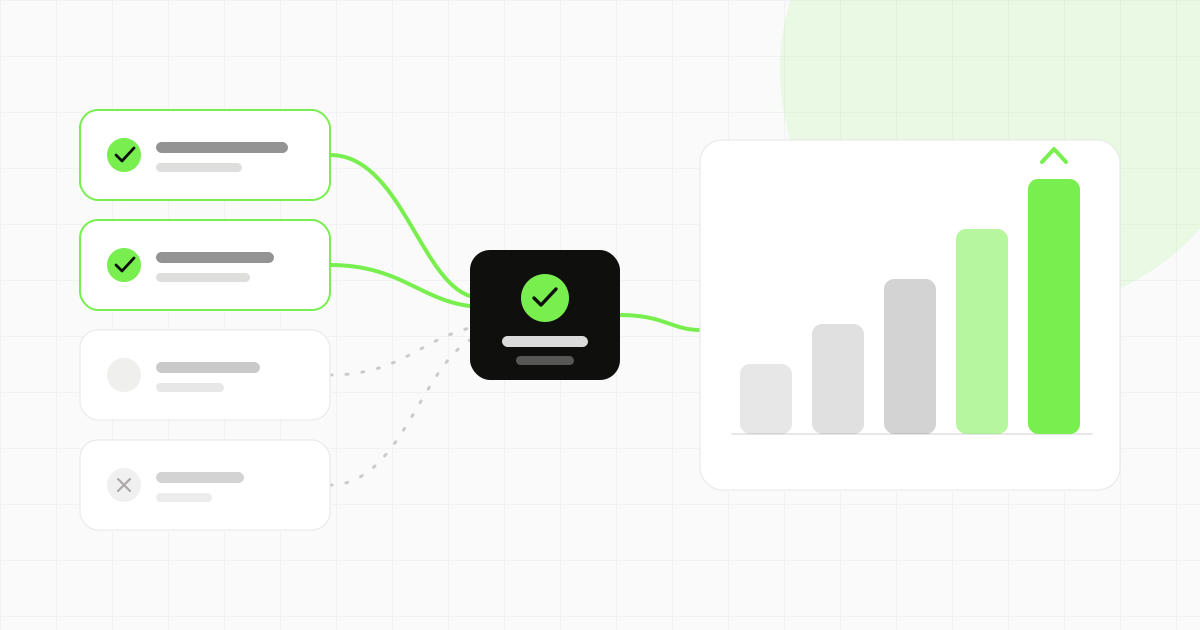
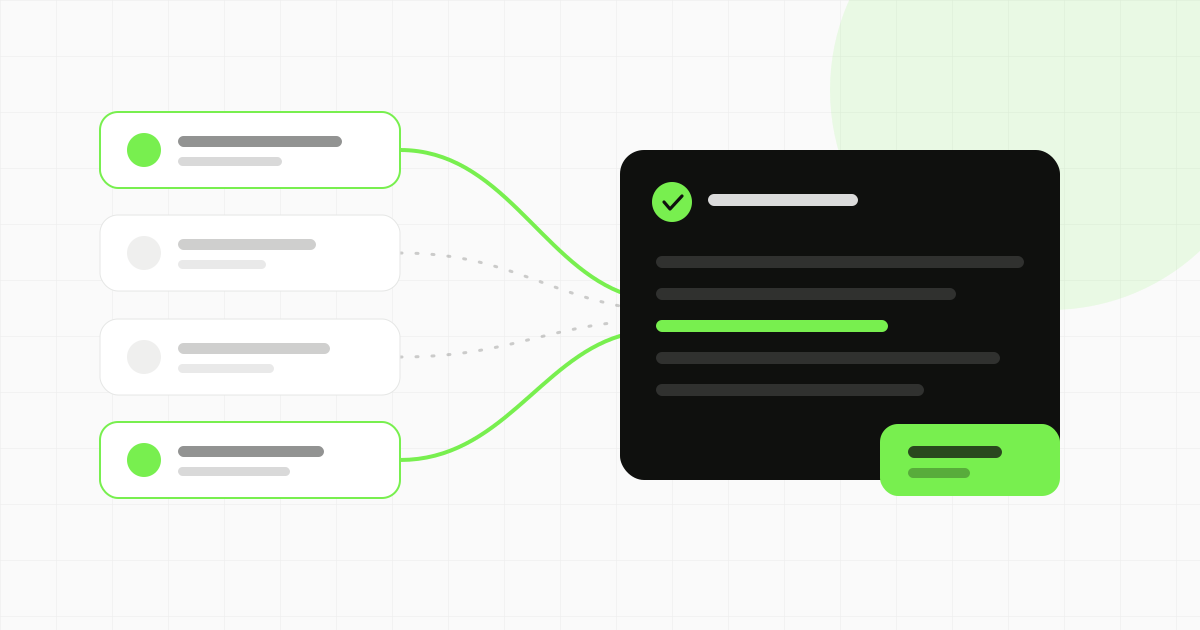
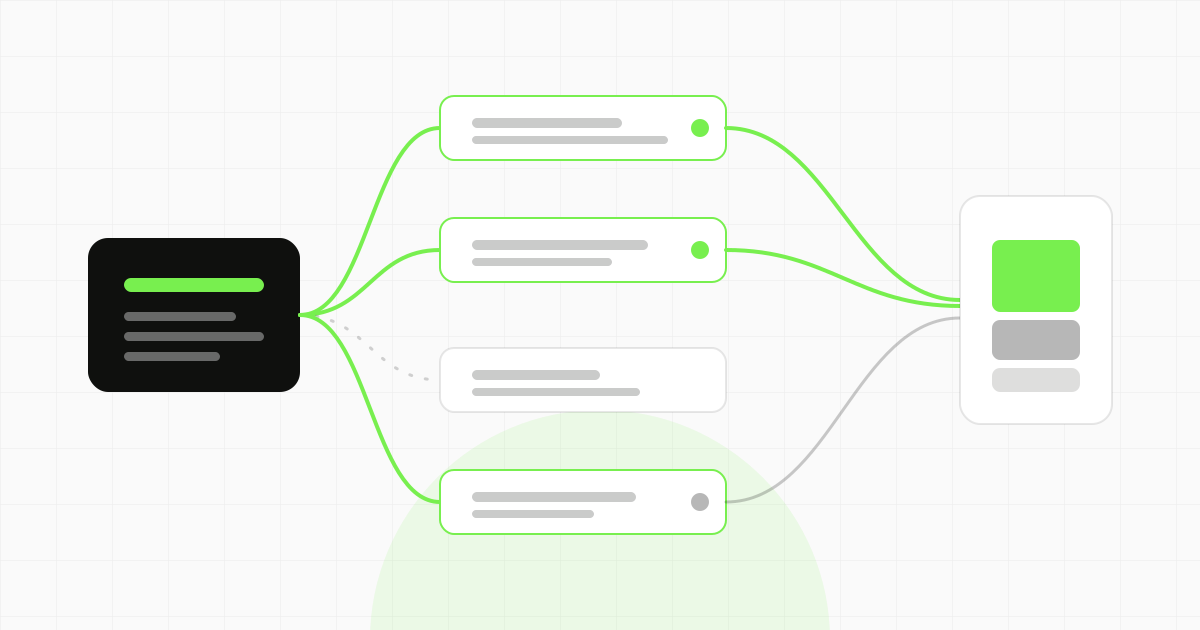
A brand mention is the naming of a brand on someone else's website. It may carry a link or not. Both forms shape perception, only one passes on link equity.
This article covers the path in between: finding mentions, judging them, and turning them into links where it pays off. That work is called link reclamation and is the cheapest form of link building, because the editorial effort has already been made by someone else.
What a brand mention is
The linked mention
The name appears in the text and points to your site. That is the normal case in editorial pieces, in source lists and in listings of providers.
It does two things. The reader can follow it, and search engines evaluate the connection between the two pages.
The unlinked mention
The name appears in the text without a link. This happens more often than most assume.
Typical cases:
a trade article names providers in the body text without linking any of them
a podcast or video names the brand, the description carries no link
a forum post recommends the brand
a press release is republished and the link is lost in the rebuild
an image or chart is used with the source given as plain text
The last case stings most, because work has been taken over.
The mention without a name
An article describes a product or a method without naming the brand. It shows up in no search and is practically unfindable. For this work it therefore plays no role.
What an unlinked mention achieves
What can be evidenced
Mentions without links are common in AI answers. A Semrush analysis from June 2026 covering close to four thousand domain mentions found that brands were named in the answer text without being linked as a source in roughly a quarter of cases. The article comparing digital PR and link building sets out those figures in detail.
For the reader, a mention works regardless of the link. Being named as a provider in a trade article registers.
What cannot be evidenced
Care is called for here, precisely because we sell placements ourselves.
There is no reliable evidence for the claim that unlinked mentions are a ranking factor in their own right. There is a plausible line of reasoning, namely that a system can process how often a name occurs in connection with a topic. Between plausible and evidenced lies a difference that many guides skip.
Equally unevidenced is a causal link between mentions and citations in AI answers. Observations exist from vendors selling measurement tools, but no analysis with a documented method.
In practice that means turning a mention into a link pays off because the effect of a link is established. It does not pay off on the argument that unlinked mentions are worthless.
Finding mentions
Without a tool
A search for the brand name in quotation marks, excluding your own domain.
An alert on the brand name that reports new finds.
Reviewing your own referral sources. Anyone sending visitors has linked. Anyone naming you without linking will not appear there, but the list shows which environments write about the brand.
With a tool
SEO tools and media monitoring services search the index systematically and report new finds. The advantage lies in completeness and in sorting by the visibility of the source.
One question matters most when choosing. Does the tool find mentions without links? Tools that only evaluate backlinks miss precisely the case at hand.
What every search misses
mentions inside images and charts
mentions in videos without captions
mentions in PDF documents that are not indexed
spellings that differ from the brand name
The last point is the most common. Anyone with a hyphen, a space or an unusual character in the name should search the variants too.
Where mentions typically arise
The kind of source determines how sensible an approach is.
Trade articles and market overviews. The best targets. They get maintained, they rank, and adding a link is a small edit for the newsroom.
Review and comparison portals. These often carry a profile you can claim and maintain. Approaching the newsroom rarely achieves more than taking over the profile.
Forums and communities. Mentions there come from users rather than an editorial team. Approaching the operator leads nowhere. Anyone active in the forum can amend their own post, where the rules allow it.
Podcasts and videos. The mention happens in conversation and the description often carries no link. The success rate is high here, because amending a description takes little effort.
Newsletters. Hard to find, because the content is rarely indexed. Mentions usually surface only when visitors arrive through a link.
Foreign-language sources. Often missed when searching for the German brand name. Anyone working internationally should extend the search to the target markets.
Judging mentions
Not every find deserves an approach. Every approach costs time and a small part of the relationship with the other side.
When an approach pays off
The site has a real readership in your topic area.
The article is recent or still gets traffic.
The mention is positive or neutral.
A suitable target page exists that justifies the link.
The article links other providers but not your brand.
The last point is the strongest opening. When three competitors are linked in the same paragraph and your brand is not, the request is obvious and easy to justify.
When it does not
The mention is critical. An approach then draws attention to a piece that has less reach without a link.
The site is visibly machine-generated.
The article is years old and no longer maintained.
The mention sits in an environment where the brand should not appear.
There is no sensible target page.
How to prioritise when there are many finds
A first search often turns up several hundred mentions at once. Working through all of them is neither possible nor sensible.
A workable order:
finds from the last four weeks, regardless of the size of the site
articles that link competitors but not your brand
sites with high visibility in your topic area
everything else, if time allows
The first two groups produce the most agreements. The third produces the most valuable links but takes more attempts.
Analysing competitors' mentions
The same search applied to competitors delivers something a backlink analysis does not.
It shows which newsrooms write about this market, which topics they pick up and in what context providers get named. That list becomes the contact list for your own work.
An article naming three competitors and not your brand is not an annoyance. It is the most concrete opportunity available, because the gap is plain to see.
Turning a mention into a link
Timing
The fresher the article, the higher the success rate. A newsroom that has just published still has the text in mind and open.
Six steps from a mention to a link.
In our experience willingness drops noticeably once a piece is a few weeks old. An alert on the brand name is therefore worth more than a half-yearly review.
Who to contact
In this order:
the author of the piece, where named
the editorial address
the general contact form
The author can usually make the change directly. Through a contact form the message joins a queue.
What the message says
Short, concrete, without offering anything in return.
Not this:
„Dear Sir or Madam, we are a leading provider in the field of link building and have noticed that you mention us in one of your articles. We would be delighted if you could set a link to our website and remain at your disposal for any further information."
Better:
Between a mention and a link there is usually one friendly email. Almost nobody writes it.
David Hahn, Managing Director, GetMentioned
„Hello Ms Muster, thanks for the mention in your piece on choosing publishers from 12 August. One small thing caught my eye. You link provider A and provider B there, but not us. If you would like to add it, here is the matching page [address]. If not, that is fine too, the piece is useful either way."
The second version names the specific article, the reason and the target page. It makes refusal easy, which raises the response rate.
The subject line
It decides whether the message gets opened, and it should name the article in question.
Not this:
„Partnership enquiry"
Better:
„Small addition to your piece on choosing publishers"
The second version shows immediately that this concerns a specific piece of their own rather than an offer.
What not to do
follow up repeatedly
offer something in return, which turns a request into a deal
ask for a link to the homepage when a suitable subpage exists
prescribe a particular anchor text
insist on a right that does not exist
Restraint on anchor text is advisable. A newsroom that adopts a prescribed wording creates a pattern that stands out across many placements.
The special case of image use
Where your own chart or photo is used without a link, the situation differs. Here a copyright claim exists.
The tone should still stay friendly. A request for attribution with a link succeeds in most cases, an invoice leads to the image being removed.
When no link comes of it
Some newsrooms never link to providers. That is a legitimate decision and usually has good reasons. Often an editorial rule stands behind it, meant to prevent individual providers from being favoured.
Other outlets link only to sources, meaning studies, data and documents. Anyone providing such a source gets the link where a plain provider mention would not have earned one. That is a hint about which content pays off over time.
The mention remains useful regardless. It gets read, it anchors the brand in its topic area, and it exists as text for AI systems.
One side effect is worth noting. A newsroom that has written about the brand once is a possible contact for a future story. The contact list for digital PR grows out of such finds as well.
Mentions and visibility in AI systems
Answer engines assemble their answers from several sources. What is written about a brand beyond its own website feeds into that.
A mention without a link therefore counts differently here than in classic search. A model processes text, not a link.
How mentions in AI answers are built and measured is covered in the articles on AI mentions and prompt tracking. For this article the step before matters. Work on mentions across the web is the groundwork. Without finds out there, a system has nothing to draw on.
What a reclaimed link means for the link profile
A link won from an existing mention differs in one respect from a bought or requested one. It sits in a text that came about without the brand's involvement.
That shows in its surroundings. The anchor text is usually the brand name, the placement sits in the body text, and the surrounding links point to other providers in the same category. Exactly this pattern arises from editorial mentions with no approach at all.
For a link profile that is the most unremarkable growth there is. Building in a mix over months, meaning reclaiming mentions, placing articles and occasionally booking, produces a distribution that cannot be traced to any single method.
Figures in circulation that do not hold
Several claims circulate on this topic for which no source can be found. We checked the most common ones.
Claim in circulation
Finding
Link reclamation has a success rate of 15 to 20 percent
No analysis with a documented method is findable. The rate depends heavily on recency and environment
Brand mentions correlate at 0.664 with visibility in AI Overviews
No verifiable primary source. A correlation without a sample and a method is not a statement
76.4 percent of ChatGPT citations come from content published in the last 30 days
No primary source findable. The precision of the figure is out of proportion to its missing origin
Backlinks are Google's most important ranking factor
Google has not said this. Company representatives have repeatedly qualified that links have lost weight over the years
Google tested a feature for brand mentions in 2023
A test evidences no effect. A discontinued experiment supports no ranking factor
One pattern repeats. The more precise a figure sounds, the more often its source is missing. A success rate quoted to a decimal place without a sample size is a warning sign.
Putting the effort in perspective
Link reclamation is cheap compared with every other form of link building. Topic research falls away, article production falls away, and the recipient already knows the brand.
A recurring routine is more realistic than a one-off push:
set up an alert on the brand name
review new finds weekly
select the worthwhile ones
write within a few days
record the outcome, including the refusals
The fifth step often gets skipped. Recording which newsrooms never set links saves the approach next time.
A simple table suffices, with the source, the publication date, the date of the approach, the contact and the outcome. After a few months that list shows which environments respond reliably and which do not.
Two metrics are worth watching. The share of finds that became links, and the time between publication and approach. When the second falls, the first usually rises.
Anyone wanting to build placements beyond existing mentions can use GetMentioned to find suitable publishers, compare SEO data and prices, and book publications directly. That is the route for environments where nobody has written about the brand yet.
Conclusion: the half-finished placement
An unlinked mention is the case where the hardest work is already done. Somebody wrote about the brand, voluntarily, in their own text.
What is missing is a short, friendly message at the right moment. The success rate depends mostly on how recent the piece is and on how easy the request is to refuse.
And when no link comes of it, the mention remains. It gets read, it anchors the brand in the topic, and it stands there as text when a system assembles an answer.
Frequently asked questions
What is a brand mention?
The naming of a brand on someone else's website, with or without a link. Both forms affect perception, only the linked one also passes on link equity.
What is link reclamation?
Turning existing unlinked mentions into links. It counts as the cheapest form of link building, because the article already exists and the brand is already named in it.
Are unlinked mentions a ranking factor?
There is no reliable evidence for it. It is plausible that systems process how often a name occurs in a topical context. Between plausible and evidenced lies a difference.
How do I find mentions of my brand?
Through a search for the name in quotation marks excluding your own domain, through an alert on the brand name, and through tools that also capture mentions without links.
What is the success rate?
There is no reliable figure. Circulating claims of 15 to 20 percent cannot be traced to any analysis. The rate depends heavily on how recent the article is.
When should I get in touch?
As soon as possible after publication. Willingness drops noticeably once a piece is a few weeks old.
What do I write?
The specific article, the reason for the link and the matching target page. Keep it short and make refusal easy. Offer nothing in return and prescribe no anchor text.
What if an image is used without attribution?
Ask politely for attribution with a link. A copyright claim exists here, but a hard approach usually only leads to the image being removed.
Is it worth approaching critical mentions?
Usually not. A link would give the piece additional visibility it would not otherwise have.
Do mentions count for visibility in AI answers?
They exist as text and can feed into an answer. A causal link between mentions and citations has not so far been measured with a documented method.
How does this differ from digital PR?
Digital PR creates new publications around a reason to report. Work on mentions starts from what has already been written. The two complement each other.
David has been building link acquisition and digital PR processes since 2016, first as an agency under SEO Galaxy, today as a platform with GetMentioned. He has scaled his own projects from zero to seven-figure monthly traffic and delivered thousands of campaigns for clients. Here he writes about what works in practice, and about what only costs budget.
Your next link does not have to be a blind buy
Compare publishers, SEO data and prices in one place and book the placements that fit.
How search engines and AI systems weigh links, which methods exist, what link building costs and how paid placements should be judged. The overview, with pointers into the detail.
Whether a brand appears in answers from ChatGPT, Perplexity or Gemini can be measured. How AI Mentions come about, which KPIs matter and what repeatable monitoring looks like.