What are backlinks? Explained simply: how websites build trust
Backlinks are digital recommendations. What they are, how search engines weigh them, which types exist and why good content alone is rarely enough. With numbers from two analyses.
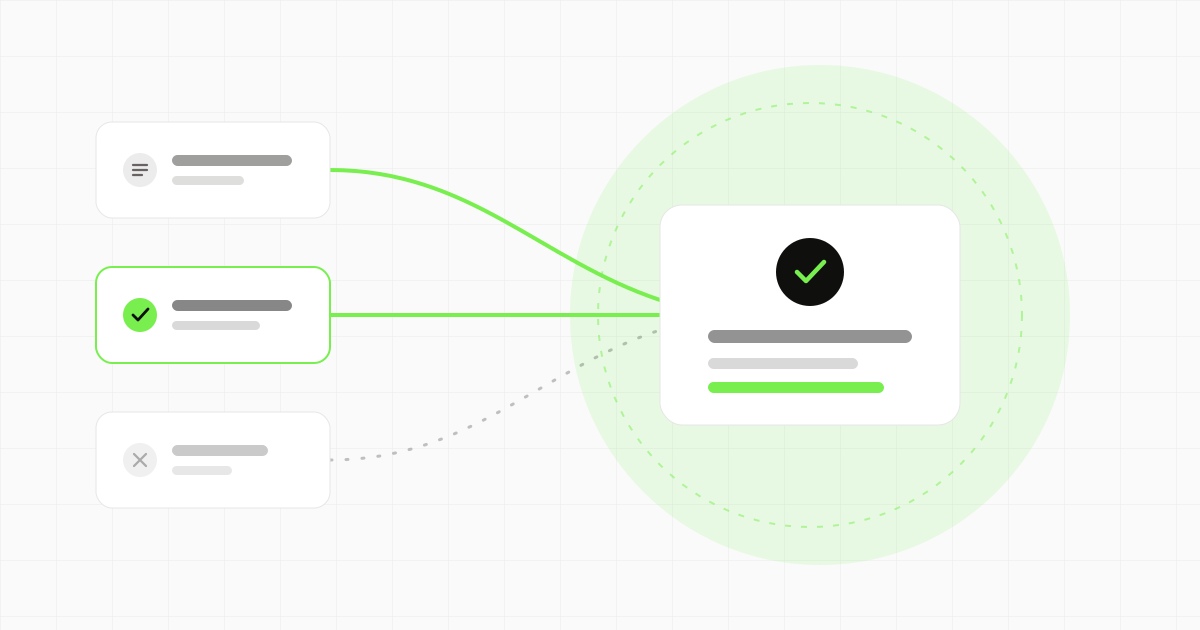
Backlinks are links from external websites to your website. They are also called inbound links or incoming links, and they show search engines that other sources point to your content, your brand or your expertise.
For SEO they matter because they tie three signals together: relevance, meaning whether the linking website fits your content in subject terms. Trust, meaning whether the link comes from a credible source. And authority, meaning whether others in your topic recommend or cite your website.
Technically a backlink is a hyperlink. Strategically it is an external recommendation. Picture an enormous library: millions of books, but not one recommendation, no reviews, nothing to tell you which book actually matters. Every book stands on its own. That is how the web would work without backlinks.
For companies, agencies and SEO teams, building them becomes important once good content is already in place but the rankings sit still. Publishing more content rarely helps at that point. What the website lacks is external authority.
What is a backlink?
A backlink can come out of very different contexts:
From a specialist article or a magazine piece
From an interview or an editorial expert contribution
From a guest article
From a study or a report
From an industry directory
From a forum post or a blog comment
Backlinks, mentions and editorial references all feed the same authority. It works in classic rankings as much as in AI answers.
Technically that is just a clickable reference. For SEO it is the signal that your website does not stand isolated on the web. Others refer to your content. That is where authority comes from.
Backlink or internal link?
Backlinks come from external websites and point to your domain. Internal links connect pages within your own website. Backlinks strengthen external authority, internal links distribute topical structure, user guidance and link equity inside the site.
Backlinks as a recommendation in real life
A backlink works like a recommendation in real life. Imagine you give a talk at a conference. People listen, but afterwards nobody talks about you. You were visible, yet the effect ends in the room. Now imagine several respected experts come up to you afterwards and pass your work on to others. Suddenly you have more than attention, you have trust. Other people lend you their credibility.
The same thing happens on the web: an external page points to your content and signals that it is relevant for its readers. The more trustworthy, topically fitting and visible that source is, the more the recommendation weighs.
The most important terms around backlinks
Term
Definition
Why it counts
Backlink
A link from an external website to your domain or to a specific target URL.
Forms the basis of your link profile.
Inbound link, incoming link
Other names for the same thing: an external link to your website.
Helps you place the different terms.
Referring domain
An external domain that links to you. Several links from the same website count as several backlinks, but as only one domain.
How many different domains point at you matters more than the link count.
Target URL
The specific page a backlink points to.
Shows which subpages receive external authority.
Link equity
A simplified term for the strength a backlink can pass on to the target URL.
Explains why links from strong, relevant pages weigh more.
Link profile
All backlinks and referring domains taken together.
A natural profile is the precondition for lasting authority.
Why backlinks count as a ranking factor
Search engines have to decide which content is relevant and trustworthy. What a page says matters for that, but it is not the only signal. Every website can claim to be the best source. Without external confirmation, real authority would be hard to tell apart from a mere claim.
Backlinks solve that problem. When relevant and trustworthy pages link to your website, a pattern emerges that search engines can read. The basic idea goes back to the PageRank algorithm: Google used links to estimate which pages others recommend or cite. PageRank no longer exists as a public figure, the principle behind it still holds.
Why good content alone is often not enough
Plenty of companies invest heavily in content: guides, landing pages, glossaries, studies. The rankings still sit at positions that barely bring traffic. The pattern usually looks the same. The website is technically sound, the content is well structured, the search intent is met, and competitors rank better anyway.
In our experience the bottleneck in those cases is no longer the content but external authority on the right target pages. Competitors have more relevant mentions, stronger links or a more credible profile overall.
Backlinks amplify what is already there. They do not replace good content, but they help search engines see that this content has relevance beyond your own website. That also explains why known brands build authority more easily: whoever is already known gets mentioned, cited and linked more often. Out of that comes a lead that reinforces itself.
How backlinks work
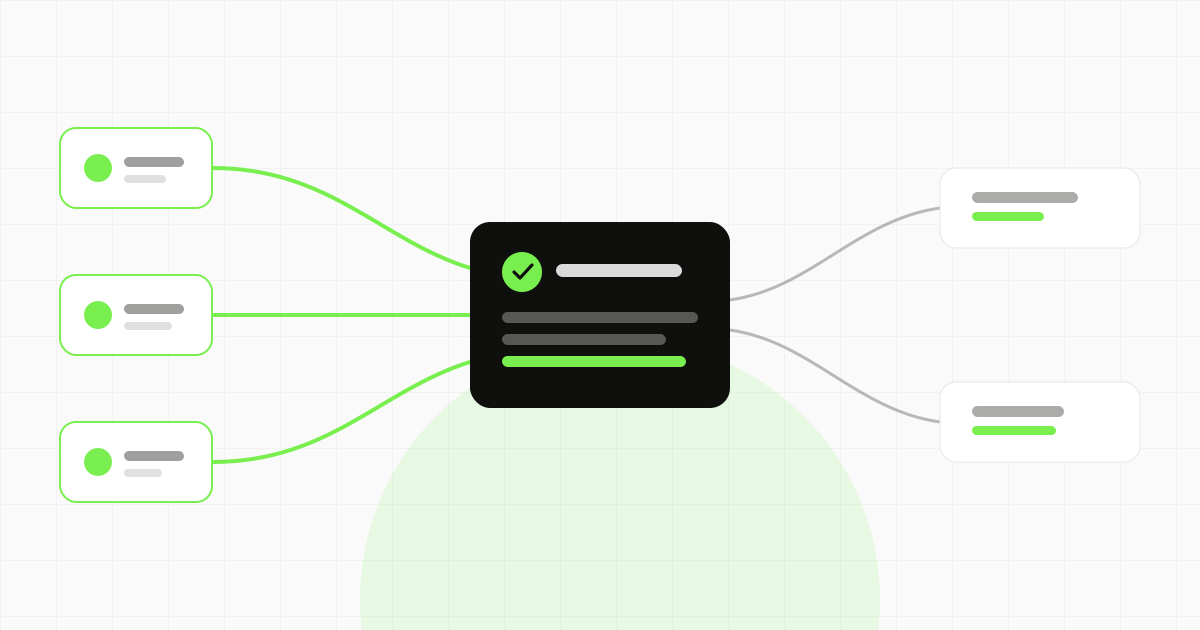
Backlinks are part of the web’s link graph. Every website is a node, every link connects two pages. Search engines evaluate these connections and see which topics belong together and which sources come recommended more often in a field.
What decides it is not the number but the quality of the connection. A link from a relevant specialist article reads differently from one out of an off-topic directory. An editorially embedded link weighs more than one in a link list. Several signals get looked at at once:
Which website is linking?
How relevant is it to the topic?
Where in the content does the link sit?
Which anchor text is used?
Is the link embedded naturally?
Is there a healthy mix of link types?
Do several independent domains link to the same website?
In the link graph it is not the number of connections that counts, but where they come from and the context they sit in.
What makes a good backlink
Not every link is valuable. Some strengthen authority, some stay neutral, some are a risk. Five criteria separate one from the other:
Criterion
Why it counts
How to spot it
Relevant source
A link from a fitting subject area looks more natural and weighs more.
The website covers similar topics and speaks to a matching audience.
Real visibility
The linking website should carry trust and editorial substance of its own.
Real rankings, visible content, regular publishing, no network pattern.
Editorial context
Links embedded with purpose give readers something of real value.
The link sits in the body copy of a fitting article, not in the footer or a link list.
Natural anchor text
The anchor text helps make clear what the target page is about.
The profile contains brand terms, URL anchors, neutral and topical wording.
Natural profile
A strong profile grows across different sources and link types.
The links do not all come from the same corner and do not use identical anchors.
Which types there are
Backlinks can be told apart by their technical attribute and by the context they come about in. Those differences help you place whether a link is an editorial recommendation, a paid placement or a user-generated reference.
Link type
Meaning
How to read it
Dofollow
The standard case of an ordinary link. Passes authority and link equity on.
Especially relevant for SEO, because no limiting attribute comes with it.
Nofollow
Carries an attribute that keeps the link from counting as a ranking signal, or counts it only in a limited way.
Valuable all the same: brings traffic, builds recognition and makes the profile more natural.
Sponsored
Used for paid placements, advertising, sponsorship or advertorials.
Important for transparency. What still decides it is quality and editorial embedding.
UGC
For user-generated content, such as links out of comments or forums.
Interesting for traffic and community signals, usually weaker than editorial links.
Image links
A linked image points to the target URL instead of a piece of text.
Sensible when the image is editorially embedded and the context fits.
Forum links
Come about in forums, communities and discussions, mostly as UGC.
Bring traffic and topical visibility when they are placed to help rather than to spam.
Directory links
Come out of industry directories, company profiles and local listings.
Useful for local visibility. The value depends heavily on how reputable the directory is.
Quality over quantity
A single strong link from a relevant trade publication can be worth more than many weak ones from irrelevant directories. A link from a trade magazine, a university or an established knowledge platform such as Wikipedia reads differently from one out of an unknown directory.
The restaurant recommendation is a good comparison: when a respected critic praises a place, that carries weight. When a bot repeats the same sentence a thousand times, it does not read as trustworthy. On the web what counts is therefore not how often you get mentioned, but who mentions you and in what context.
The most valuable backlinks come from topically relevant, trustworthy and visible websites. The link should be editorially embedded, sit in the body copy of a fitting article, carry a natural anchor text and make sense to readers.
How high-quality backlinks come about
They come about when other websites have a real reason to point to your content. In competitive markets, though, it is not enough to publish good content and hope somebody discovers it. There you need a strategy: not collecting links at random, but becoming visible in relevant subject areas systematically.
A backlink is worth something because it comes from outside. What a website claims about itself is marketing. What others write about it is evidence.
David Hahn, Managing Director, GetMentioned
Content worth citing
What works particularly well is content that serves as a source: studies, data analyses, industry reports, tools, frameworks, checklists, expert assessments, comparisons and original data. They give other websites material for their own pieces, and that is what makes your content worth linking to.
Here too the BuzzSumo analysis shows that reach alone does not make content link-worthy. What got linked often were original, well-written and thoughtful posts, the kind with a perspective of their own, a clear argument, new data or a point other authors can refer to.
Guest posts and expert contributions
Both can produce high-quality links when they appear in relevant subject areas and offer real value. What decides it is that a guest post is not conceived as a mere link carrier. It should go deeper into a topic, show expertise and fit the editorial context. Then it strengthens more than the link profile, it positions the brand as a source.
Digital PR
Digital PR combines PR logic with SEO goals: content, data or expert contributions get prepared so that publishers and trade sites can report on them. What comes out of it is not only backlinks but mentions, reach and trust. It works especially well when a study or a statement gets picked up by relevant media.
Strategic publisher placements
These help you become visible exactly where your audience already looks for orientation: in trade portals, industry media and magazines. That covers interviews, specialist articles, sponsored posts and advertorials. What decides it is not the placement itself but the topical fit between publisher, target URL and search intent. Good placements read like editorial mentions a reader can follow, not like link packages.
Buying backlinks: the honest reading
Buying backlinks is often understood as a banned SEO tactic across the board. That reading falls short. What is problematic is above all link practices meant to manipulate rankings artificially, not paid visibility as such. In practice there are many forms: advertorials, sponsored posts, guest articles, interviews or editorial placements with topical value.
What decides it is not the purchase but the quality of the placement. Four questions separate the usable from the risky: does the website fit the target page in subject terms? Is there real content and real visibility? Is the piece embedded in an editorially sensible way? And does it offer readers value they can follow?
It also matters not to treat backlinks as isolated packages. What lasts is an approach that ties links, brand mentions and digital PR together as part of authority you can plan. That is exactly the difference between buying links for the short term and building for the long one. In GetMentioned as a placement marketplace you compare publishers, SEO data and prices in one place and document the publications centrally.
Monitoring and risk
Anyone building backlinks should check their profile regularly. Not every link every day, but quality, relevance and the direction of travel as a whole. What matters is the linking domains, their topical proximity, the anchor texts used and conspicuous patterns such as sudden link spikes.
In practice lost links get noticed less often than new ones, and they cost just as much visibility: articles get deleted, URLs change, domains get sold. You can check that through Google Search Console and tools such as Ahrefs, Semrush, Sistrix, Majestic or Moz.
Toxic backlinks become critical above all when they appear in large numbers, out of obviously manipulative sources or with unnatural patterns. Single weak links from scraper sites or spam blogs are mostly just background noise. The disavow tool therefore belongs in clear cases only: when there is a recognisable pattern of harmful links, not to remove every weak link.
Backlinks and AI-assisted search
Backlinks are not only relevant for classic rankings. They are part of a larger authority system. AI answers and recommendation results increasingly draw on signals that show which brands and sources are visible and trustworthy in a subject area. That is not only about the single link, but about mentions, expert contributions, interviews and editorial references.
This is getting more important because search queries more and more consist of whole questions, comparisons and follow-ups. Users are not only looking for keywords but for orientation and help with a decision. Being visible regularly in trustworthy contexts therefore builds more than link equity, it builds topical authority.
AI systems draw on the same external signals as classic rankings to place sources.
What backlinks mean for companies
Backlinks are not an isolated SEO detail. They show whether other websites, media and trade portals mention a brand, cite it or treat it as a relevant source. When competitors get named regularly in industry portals and expert contexts, an authority lead builds up that works on more than rankings, it works on brand perception and on the situations where people decide.
That becomes particularly relevant for companies that already produce high-quality content and still get nowhere. The question then is rarely: do we need even more content? The better question is: are we missing external authority?
In closing
Backlinks are digital recommendations. They show search engines that other websites point to your content and treat it as a source. What decides it is not the number but whether the references come out of relevant, trustworthy and editorially sensible contexts. A natural profile, fitting anchor texts and ongoing monitoring weigh more than link volume in the short term.
Not every page needs backlinks. Pages with business value and ranking potential need external authority built on purpose. Anyone who wants to be recommended by the right pages needs placements that fit their own topic. Create your free account and see which publishers fit your topics.
Common questions about backlinks
What is a backlink, simply put?
A link from an external website to your website, also called an inbound or incoming link. For search engines it is a hint that your page can be relevant in a particular context.
Why do backlinks matter for SEO?
They help search engines estimate the trust, relevance and authority of a website. When relevant and trustworthy websites point to your content, that improves the chances of better rankings.
How do backlinks work?
They connect websites with one another. Search engines analyse those connections and weigh, among other things, which website is linking, how relevant the context is, which anchor text is used and whether the link is embedded naturally.
What is a good backlink?
It comes from a relevant, trustworthy and genuine website, sits in a fitting editorial context, uses a natural anchor text and offers readers value they can follow.
How many backlinks do I need?
There is no fixed number. What decides it is how strong the competition in your subject area is, which pages already rank and how good their profiles are. In some niches a few strong links are enough, in contested markets it takes continuous building across many domains.
How long do backlinks take to work?
Rarely straight away. Search engines first have to discover new links, place them and weigh them in the context of the whole profile. First effects are possible after a few weeks, in contested markets lasting build-up usually takes several months.
What separates Dofollow and Nofollow?
Dofollow links are ordinary links that can pass link equity on. Nofollow links carry an attribute signalling to search engines not to count the link for ranking purposes, or to count it only in a limited way. They can still be valuable, through traffic, visibility and brand effect.
What separates backlinks from brand mentions?
A backlink contains a clickable link. A mention names the brand without a link necessarily attached. Backlinks work more strongly as a direct link signal, mentions support recognition, trust and topical authority.
What matters more: content or backlinks?
That is not an either-or question. Content answers the search intent, backlinks deliver external authority. Without good content, strong links do little. Without authority, good content often stays invisible in contested markets.
Can SEO work without backlinks?
In niches with little competition yes, when content, technical setup and search intent fit very well. In competitive markets backlinks are usually the deciding difference, because competitors with stronger external authority have better chances.
How can I check my backlinks?
Through Google Search Console and tools such as Ahrefs, Semrush, Sistrix, Majestic or Moz. What matters is not only counts and metrics, but quality, context, anchor texts, link attributes and how the whole profile develops.
Are bought backlinks dangerous?
They get risky when they are built manipulatively, in bulk, off-topic or through artificial networks. What holds up is a quality approach with relevant publisher contexts, clear editorial embedding and transparent placements.
Are backlinks still important today?
Yes. They help classic search engines as well as AI-assisted answer systems place trust, relevance and authority. Alongside backlinks, brand mentions, digital PR and editorial references are getting more important too.
How does GetMentioned help with building them?
Instead of researching publishers by hand, comparing prices one by one and coordinating publications across scattered places, you find fitting publishers in one place, compare SEO data and prices, book placements directly and document them centrally.
David has been building link acquisition and digital PR processes since 2016, first as an agency under SEO Galaxy, today as a platform with GetMentioned. He has scaled his own projects from zero to seven-figure monthly traffic and delivered thousands of campaigns for clients. Here he writes about what works in practice, and about what only costs budget.
Your next link does not have to be a blind buy
Compare publishers, SEO data and prices in one place and book the placements that fit.
Link building rarely fails on method, it fails on missing prioritisation. Nine steps from analysis through target pages, assets and publishers to measurement, with a scorecard, a 90-day roadmap and a KPI set.
Tool comparisons usually end up as feature lists. This overview sorts the tools by the bottleneck they solve instead: prospecting, outreach, placement or monitoring.
When rankings stall despite good content, external authority is usually what is missing. Seven steps from prioritising target pages to measuring the effect, with a method comparison, anchor text spread and the KPIs that show what worked.