Backlink Analysis: From Link Profile to Priority List
How to evaluate a link profile: which data you need, which metrics say something, how the competitor comparison works and what comes out as a work list.
A backlink analysis is a snapshot of every external reference pointing to a website at a single point in time: which domains link, out of which environment, with which anchor text, and how all of that compares to the competition. It answers the question of how a link profile is set up, and with that it provides the foundation for every further step in off-page optimization.
Not to be confused with monitoring. The analysis gives you one picture, monitoring gives you a series of them. If you want to know what changes and when you need to react, that is covered in Backlink monitoring. This article is about recording the current state.
What Data a Backlink Analysis Needs
Before the evaluation starts, it has to be clear where the numbers come from and what they cover.
The gap between sources reveals which commissioned placements never actually appeared.
Where the Data Comes From
Google Search Console shows the links Google itself knows about. It is free and the only source that comes straight from the search engine operator, but it offers no quality assessment.
Backlink tools deliver the inventory along with their own metrics. Many treat Ahrefs as the reference point for the size of the live index, Semrush covers competitor analysis and auditing broadly, SISTRIX is particularly widespread in German-speaking markets, and Seobility is a cheaper alternative for smaller projects. Each one runs its own crawler, which is why the numbers differ from one another.
Your own campaign documentation shows which placements were commissioned and whether they actually went live.
The entirety of all incoming references is called the link profile. It is what every analysis looks at, and it consists of more than a single number: the referring domains, how they are distributed, the anchor texts, where the links sit and which attributes they carry.
What Follows From Comparing the Data Sources
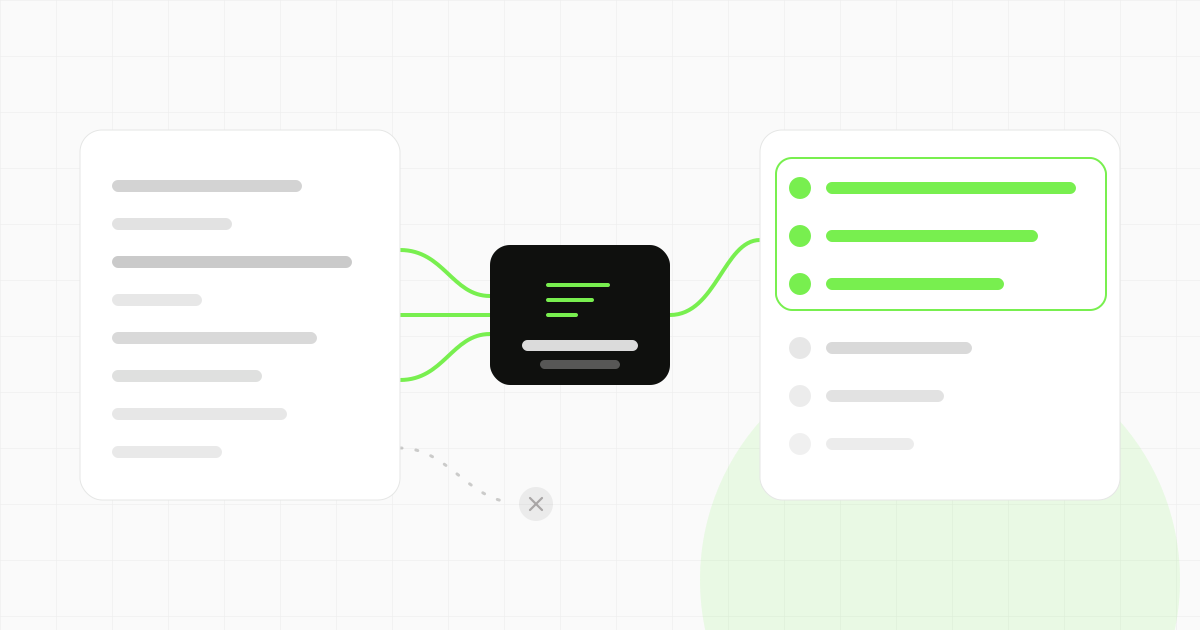
Comparing these three sources is what produces the actual result: which links Google knows, which ones only the tools know, and which commissioned placements never arrived. That difference is exactly the part a pure tool export will not show you.
One note that saves a lot of disappointment: no tool sees every link. The deviation between two providers regularly lands in the double-digit percentage range, because they crawl different amounts of the web. Absolute numbers are therefore of little use, while ratios and comparisons are worth a great deal.
The Analysis in Six Steps
Define the target pages the profile is actually relevant for.
Export the inventory from at least two sources.
Remove duplicates and obvious spam.
Build metrics instead of judging individual links.
Compare against the domains that are visible for your keywords.
Turn the gaps into a list of priorities.
The order is the point: without defined target pages, step 4 measures something nobody needs.
Why the Target Pages Are Fixed First
Analyzing the profile as a whole sounds thorough, but it rarely leads to an action. It only gets interesting per target page: a money page without external references is a finding, a blog overview without references is normal. In practice we see teams evaluate profiles for weeks and still not know afterwards which page needs support next.
Why Duplicates and Spam Come Out Before the Evaluation
Exports regularly contain the same domain several times over, plus directories, scrapers and automatically generated pages nobody ever commissioned. Count those rows in and what you are mainly measuring is the background noise of the web.
Metrics and What They Tell You
Metric
What it shows
What to watch for
Referring domains
How many different websites link to you
More meaningful than the number of links
Links per domain
How heavily references concentrate on a few sources
Very high values point to footer or sitewide links
Anchor text distribution
How natural the profile looks
A pile-up of one preferred term is a pattern that rarely happens by chance
Topical relevance
Whether the sources fit your own field
The metric measured least often and needed most often
Trust and Citation Flow
Proximity to trust and reach according to Majestic
Provider estimates, not a ranking factor
Share of followed links
How many references count as a recommendation
A mixed profile is normal, a purely followed one stands out
What Trust Flow and Citation Flow actually measure, and how to read the relationship between them, is covered in Trust Flow explained and Citation Flow explained. Domain Rating and Spam Score work on the same principle: useful estimates for pre-sorting, not verdicts.
Link Popularity: Reading Volume and Quality Together
Link popularity describes how many independent sources point to a page. It is a measure of quantity and, taken on its own, it says very little. A picture only emerges once you read it together with the quality factors: a backlink profile with high volume but weak topical proximity is in a worse position than one with fewer references that actually fit. When you run a backlink analysis, lay both figures side by side instead of deciding for one of them.
Distribution Matters More Than the Total
A profile with 200 references from 180 different domains looks completely different from one with 200 references from twelve. The spread shows whether external authority comes from many independent sources or rests on just a few places. A broadly distributed profile typically comes out of visibility that grew over time, a narrow one out of few placements that were repeated.
What a Backlink Checker Can and Cannot Do
A backlink checker is the tool the raw data comes out of. You recognize good features by whether backlink data can be compared across different time periods, whether anchor texts and attributes such as nofollow links get reported along with it, and whether several websites can be checked side by side. For the link analysis itself that is not enough: a tool delivers rows, the assessment stays work. Which class of tool solves which bottleneck is compared in The best link building tools.
Where the Link Sits on the Page
References inside the body text of an article are weighted considerably more heavily than links in footers, sidebars or link lists. The reason is straightforward: whatever sits in the navigation appears on every subpage and is therefore not a statement about any particular piece of content. When you evaluate the inventory, it pays to separate it by placement instead of counting every row the same.
Why Volume Is the Wrong Guiding Metric
Quality beats quantity, and in an analysis that shows up particularly clearly. Ten topically fitting references from publications with their own editorial team say more about a domain than a thousand entries from directories. Not every page needs backlinks, but pages with business value and competition need the right ones.
Competitor Analysis and Link Gap
The comparison is the part with the biggest practical payoff, because it replaces absolute values with relative ones. The question is not "are 400 domains a lot", it is "who links to the pages that rank ahead of me for my keyword".
An analysis that does not produce a priority list is a report. Reports do not change rankings.
David Hahn, Managing Director, GetMentioned
Who You Should Actually Compare Against
A common mistake: the comparison gets made against the rival that sales talks about. For this analysis, though, what counts is who is visible for the relevant search queries. Those are often trade publications, comparison portals or knowledge sites, not the company one town over.
In our experience this is where analyses most often come to nothing: the result describes a set of competitors that compete for the same customers, but not for the same search results.
Making the Gap Visible
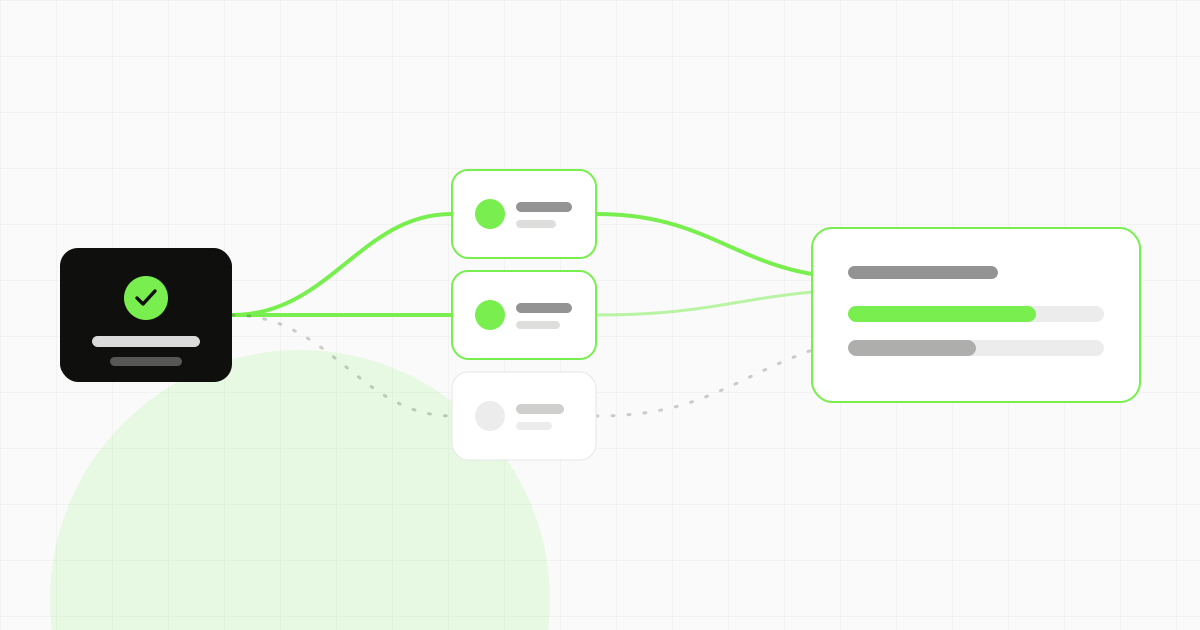
A link gap shows domains that point to several comparison sites but not to you. It is the most concrete list an analysis can produce, because every row has already proven that it writes about the topic.
So that this list does not have to be assembled by hand, MentionIQ analyzes your website, your competitors and your important keywords, and identifies suitable link sources and placements from that.
The Gap No Backlink Tool Shows
Backlink tools capture references. They do not capture mentions of a brand without a link. For AI search systems those mentions are exactly what matters, because there it is the text an answer gets built from that counts. A competitor analysis that only looks at links therefore misses part of the visibility picture. How to measure that is covered in AI visibility.
What a Suspicious Profile Reveals
Suspicious does not mean guilty. It means: look closer.
Many references from domains with no recognizable editorial team or audience of their own.
Outbound links dominate the article inventory of the linking site.
One anchor text repeats almost word for word across many domains.
Growth arrives in bursts instead of continuously.
Off-topic sources with no connection to the subject matter.
Paid placements explicitly do not belong on this list. An invoice does not make a reference suspicious; what is suspicious are patterns without any editorial connection. A sponsored post in a trade magazine, topically fitting and labeled as such, is a different thing from a hundred placements out of one network.
What You Take Away From the Analysis
An analysis that ends in a number was an exercise in diligence. It has to lead to three statements:
Which target pages need external authority first?
Which domains from the link gap are realistic options?
Which existing references are so valuable that losing them would have to be noticed?
The third point is the handover to monitoring.
For the roles inside a company, the result means different things. SEO teams get a work list. Marketing leads get a justification for a budget, because the gap to the competition is quantified. For management, it becomes visible how far behind the site is and over what period that can be closed.
So that the choice of publishers afterwards does not come down to gut feeling: GetMentioned is a placement marketplace for backlinks, brand mentions and digital PR, where you select suitable publishers, compare SEO data and prices, and book placements directly. The GetMentioned Score brings together price, SEO data, authority and possible impact instead of judging sources by a single metric.
Conclusion: the analysis is a way to set priorities
A backlink analysis is not a counting exercise, it is an aid to prioritization. Absolute numbers are unreliable because no tool sees the whole web. What makes the evaluation solid is ratios, the comparison against the domains that are actually visible, and the question of which target page needs support next. Everything else is a report nobody reads.
Frequently asked questions about backlink analysis
How do I analyze my backlinks?
Define your target pages, export the inventory from at least two sources, remove duplicates and spam, build metrics instead of judging individual links, and compare against the domains that are visible for your keywords.
Which tools do I need for it?
A backlink tool for the inventory and Google Search Console for the search engine's own view. Which class of tool solves which bottleneck is covered in The best link building tools.
Why do two tools show different numbers?
Because every provider runs its own crawler and covers a different amount of the web. That is why ratios and comparisons hold up better than absolute values.
How many referring domains are good?
There is no universally valid number. What matters is the gap to the pages that are already visible for the same search query.
What is a link gap?
The set of domains that link to several comparison sites but not to yours. Each of those domains has already proven that it writes about the topic.
How do I recognize harmful backlinks?
By patterns, not by individual cases: off-topic sources with no connection, identical anchor texts across many domains, pages that consist mostly of outbound references.
Do I have to get bad links removed?
In most cases, no. The disavow tool is meant for cases where third-party, harmful references cannot be removed, not for cleaning up your own decisions.
How often should I run an analysis?
As a full snapshot, once or twice a year is enough, plus whenever something major happens. Ongoing observation is monitoring's job.
Do mentions without a link count in the analysis?
They do not show up in classic backlink tools. For visibility in AI systems they are relevant nonetheless, because there it is being named in the text that counts.
What do I do with the result?
A list of priorities: which target page comes first, which domains from the link gap are realistic, and which existing references are so valuable that losing them would have to be noticed.
David has been building link acquisition and digital PR processes since 2016, first as an agency under SEO Galaxy, today as a platform with GetMentioned. He has scaled his own projects from zero to seven-figure monthly traffic and delivered thousands of campaigns for clients. Here he writes about what works in practice, and about what only costs budget.
Your next link does not have to be a blind buy
Compare publishers, SEO data and prices in one place and book the placements that fit.
A link you built is not a possession. How ongoing monitoring works: what gets watched, how often, which alerts make sense and what belongs in reporting.
Trust Flow looks like a decision number, and that is exactly the problem. How the Majestic metric is built, what counts as a good value, and which decisions you can actually take from it.
Link building rarely fails on method, it fails on missing prioritisation. Nine steps from analysis through target pages, assets and publishers to measurement, with a scorecard, a 90-day roadmap and a KPI set.