Trust Flow explained: what the metric says about link quality
Trust Flow looks like a decision number, and that is exactly the problem. How the Majestic metric is built, what counts as a good value, and which decisions you can actually take from it.
Plenty of teams use Trust Flow as their number for backlink audits and publisher checks. At first glance it looks like a clean decision metric. That is exactly the problem.
In our experience Trust Flow is above all a diagnostic value. It shows how close a link profile sits to trusted sources by Majestic logic, but it does not replace a qualitative look. It only holds up alongside Citation Flow, Topical Trust Flow, referring domains, organic visibility and a manual look at the placement itself.
This guide sorts the metric out in practical terms: what it is, how it is built, how to read it properly, and which concrete decisions follow from it.
What is Trust Flow?
Behind it sits a simple assumption: links from trusted sources are a stronger quality signal than links from arbitrary or weak surroundings. Important: Trust Flow is not an official Google signal, it is a tool vendor’s analysis value.
How Majestic calculates Trust Flow
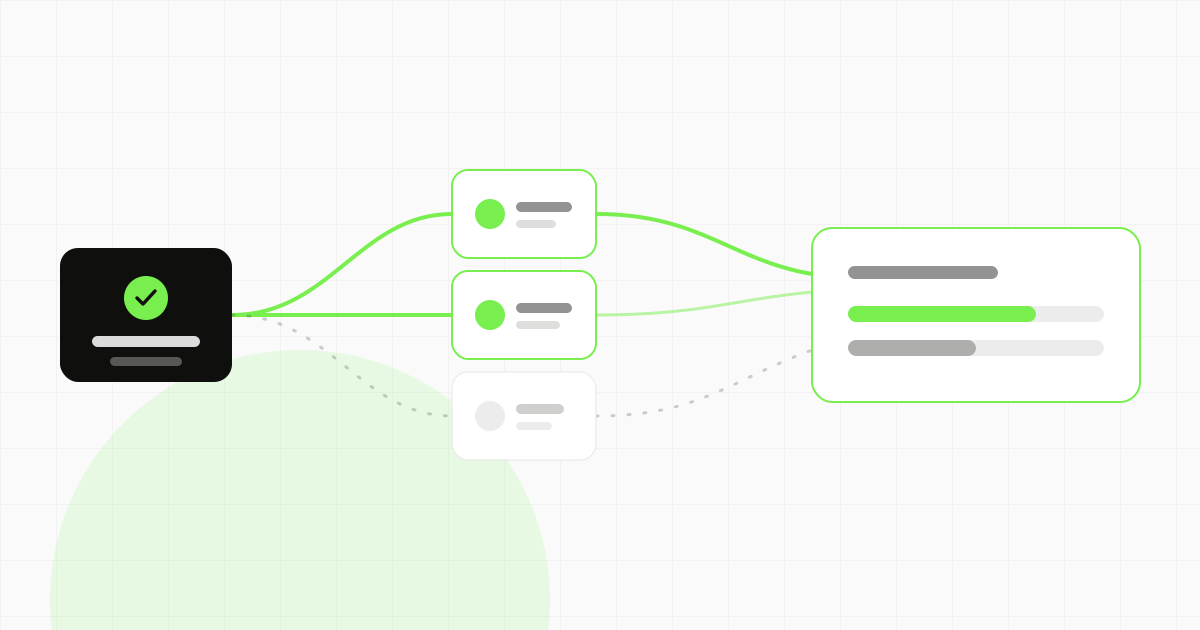
The value is based on how close a domain or URL sits to trusted sources in the link graph. Majestic uses its own Web Map, an extensive link database of the internet, and a hand-curated seed set of websites considered particularly trustworthy.
The principle: sites in that seed set are more likely to link on to other high-quality content. The closer a domain sits to them through direct or indirect links, the more that shows in its Trust Flow.
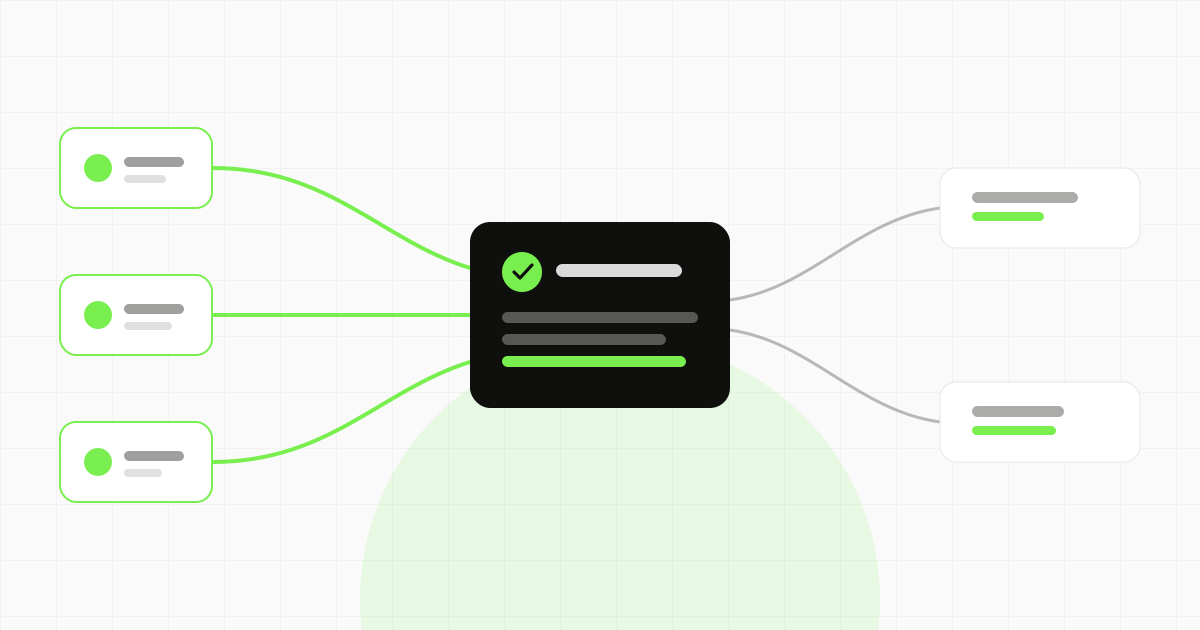
So Trust Flow does not work like counting backlinks. A new link does not automatically raise the value. What decides it is the quality of the linking sources and the neighbourhood in the link graph. Many weak or off-topic links do not produce the signal that a few strong ones from trusted surroundings do. The exact calculation stays proprietary. For practice one thing matters above all: Trust Flow judges link quality and proximity to trust, not link volume alone.
Proximity to the curated seed set is what decides, not the number of incoming links.
Trust Flow and Citation Flow: the difference
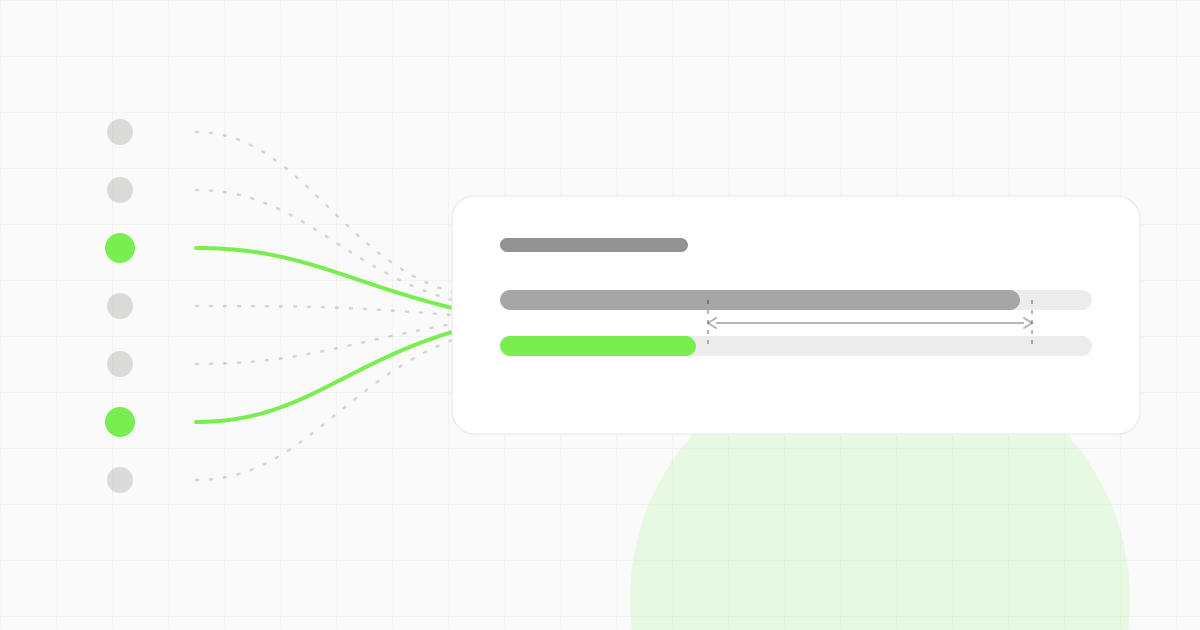
Majestic gives you two flow metrics that want to be read together. Trust Flow stands for quality and proximity to trust, Citation Flow more for link volume and link strength. Only together do they produce a picture that holds up for audits and competitor analysis. That is why sorting publishers or websites on a single value alone is risky.
One value describes proximity to trust, the other volume. Only the ratio carries a decision.
Reading the TF/CF ratio
The most useful part is the ratio between the two. As rough orientation 1:1 counts as balanced, even if that balance is rare in practice. As a screening step it works well for spotting unusual domains or segments in a backlink profile.
An example from our experience: Trust Flow 30 against Citation Flow 60, so 1:2, suggests link volume is growing considerably faster than trust signals. A low Trust Flow with a much higher Citation Flow can point to many links of limited quality or to unnatural patterns, and belongs in a manual check.
Typical patterns of Trust Flow and Citation Flow
High Trust Flow plus a matching Topical Trust Flow: potentially a strong domain in the right topic.
High Citation Flow with low Trust Flow: a signal to check, especially alongside odd link sources or one-sided anchor texts.
Low Trust Flow with high topical relevance: not a reason to exclude, particularly for small or specialised sites.
High Trust Flow in an unrelated topic: usually worth less for link building than a lower but topically fitting value.
Sharp swings: check in monitoring and reconcile against new or lost links.
What counts as a good Trust Flow?
Only comparison answers that. Majestic itself recommends using the flow metrics for like-for-like comparisons: similar page types, similar domains, real competitors. A homepage value does not belong next to the value of a single subpage.
What matters is industry, competition, domain history, page type and topic. For a small niche site a lower value can already be solid, while large publisher domains should sit considerably higher. In practice: never judge it as a single number. Check whether Trust Flow, Citation Flow, Topical Trust Flow, visibility, link context and target-page fit add up to a coherent picture.
Topical Trust Flow: where the trust comes from
Topical Trust Flow sorts a domain’s proximity to trust by topic. Where Trust Flow judges general proximity, Topical Trust Flow shows which categories those signals come from. Majestic works with over 800 topically classified pools of websites for this.
The algorithm follows the outgoing links from those topic pools and passes on more than a strength signal with them: it also passes on a topical classification. That is what makes it visible whether a site has built its trust in the relevant surroundings or somewhere else entirely.
For publisher evaluation this is the more important value. A domain can have strong general metrics and still sit too far from your target page in subject terms. For guest articles, advertorials and digital PR, Topical Trust Flow is what separates metrically strong but unrelated sources from genuinely relevant placements. For authority that lasts the rule is simple: backlinks, mentions and editorial references should come from topics that fit.
Trust Flow is a good first filter and a poor final argument. Buying on that number without opening the page means buying a number.
David Hahn, Managing Director, GetMentioned
Trust Flow day to day: audit, competitors, publishers
Backlink audit: as a filter to mark unusual parts of the profile for a manual look. Do not equate it with Moz Domain Authority or Ahrefs Domain Rating, each metric follows its own logic.
Competitor analysis: compare Trust Flow, Citation Flow, Topical Trust Flow and referring domains of competitors. That shows which publisher clusters carry their authority.
Publisher evaluation: fine as a pre-filter, but always combined with topical fit, visibility, context, anchor spread and target-page fit.
Which topical settings you are missing against the competition is what MentionIQ evaluates: the analysis compares your website, your competitors and your most important keywords and shows which link sources are still open. Competitors here are not only your direct business rivals, but every website visible for your keywords.
For the selection itself the GetMentioned Score helps: it pulls relevance, price performance, authority and likely effect into one rating instead of judging publishers on a single metric. In GetMentioned as a placement marketplace you then pick suitable publishers, compare SEO data and prices and book the placement directly.
For larger teams and agencies the Majestic API can matter too: it lets you pull the flow metrics into your own reports, dashboards and review workflows instead of looking them up one by one in the tool.
From Trust Flow to a decision
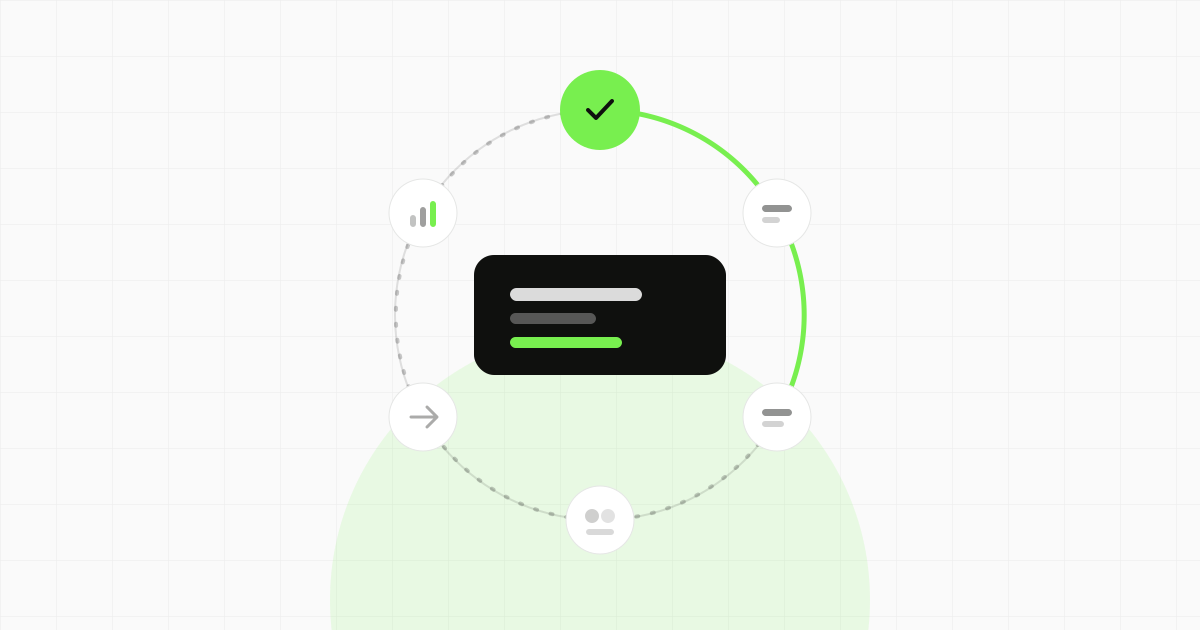
Trust Flow only becomes useful once an action follows from it. This grid helps sort the signals:
Signal
What it indicates
Risk
Next step
Priority
Trust Flow
Link quality and proximity to trust
overrating it in isolation
reconcile with Citation Flow, topical fit and visibility
high
Citation Flow
Link volume and link strength
high values built from many weak links
check the ratio against Trust Flow
high
Topical Trust Flow
topical proximity to trust
a high value in the wrong topic
check publisher fit and target-page fit
high
Organic visibility
real SEO relevance
tool data can be incomplete
check rankings, traffic and indexing
medium to high
Editorial context
the quality of the placement
link lists, footer links, obvious sponsored patterns
look at the placement by hand
high
Target-page fit
the strategic use of a link
authority flows to the wrong URL
check target page, search intent and internal linking
high
Four concrete moves follow from this grid:
Prioritise publishers: a solid Trust Flow, a matching Topical Trust Flow and clean patterns
Trigger a manual check: an odd ratio between the two flow values, unrelated topics, a questionable anchor spread
Sharpen the strategy: which topics are you missing, and where are high-quality referring domains absent?
Monitoring: do not react to daily values, judge trends and mirror them against visibility and traffic
Can you improve Trust Flow?
Not in isolation. Majestic points out itself that the flow metrics do not directly influence search engines. A rising Trust Flow is the result of good SEO, content and digital PR work rather than a goal in its own right. For teams focused on growth that means the work should build real market presence and editorial visibility, not serve a number.
A natural link profile grows out of different link types and contexts: editorial mentions, guest contributions, studies, selected directories, digital PR and brand mentions. What stays decisive is the quality of the source, topical proximity and editorial context.
High-quality, topically fitting backlinks and mentions from trusted sources
Digital PR in relevant media
Linkable assets such as data, studies, calculators or expert content
Reviewing odd link patterns regularly, without blanket disavowing weak links
Internal linking, to pass external authority on to the pages that matter
The most common mistakes with Trust Flow
Trust Flow gets misused because people treat it as a verdict. It delivers hints, and so it belongs inside a set of further checks. These are the mistakes we see most:
Treating Trust Flow like a ranking factor
Choosing publishers on one number alone
Equating Trust Flow with Domain Authority or Domain Rating
Ignoring or overrating Citation Flow
Never looking at Topical Trust Flow
Skipping referring domains, anchor spread and context
Over-reading every swing in monitoring
Rejecting weak links automatically without checking pattern and source
Trust Flow and visibility in AI answers
Trust Flow is not a metric for visibility in AI answers. It can still hint at how close to trust a link profile sits compared with other sites in the same topic.
That becomes relevant because systems like ChatGPT, Perplexity, Gemini, Claude and Google AI Overviews sort, summarise and partly cite information from a range of sources. Trust Flow is no official rating value in any of them. But authority, source quality, topical relevance and external confirmation do play a part in which information gets picked and cited.
In our experience high-quality backlinks, brand mentions and editorial references all feed the same digital credibility. A strong link profile therefore supports classic visibility and at the same time improves the base for a brand to appear as a source in AI answers.
In closing: a decision aid, not a verdict
Trust Flow helps you sort link quality faster. For decisions that hold, read it together with topical relevance, visibility, link context and target-page fit. As a standalone number it says little. Anyone who wants to count as a source for their own topics needs placements that stand up to this check. Compare suitable publishers on data before budget moves. Create your free account.
Common questions about Trust Flow
What is Trust Flow?
A Majestic metric from 0 to 100 that estimates how trustworthy a link profile is based on its proximity to curated seed websites.
Is Trust Flow a Google ranking factor?
No. Trust Flow is not a Google metric, it is a proprietary analysis value from Majestic.
What separates Trust Flow and Citation Flow?
Trust Flow stands more for quality and trust, Citation Flow for link volume and strength. The ratio between them is what helps with interpretation.
What is a good Trust Flow?
There is no universal answer. Industry, competition, topic and the comparison with similar sites or relevant publishers decide it.
What does Topical Trust Flow mean?
It shows which topic categories a site has built trust in, that is, where the trusted links come from in subject terms.
How can Trust Flow be improved?
Only indirectly: through high-quality, topically fitting backlinks, digital PR, brand mentions and a cleanly diversified link profile.
Is a high Trust Flow enough for a good backlink?
No. Topical relevance, context, link position, visibility, anchor spread and target-page fit weigh just as much.
How does Trust Flow feed into the GetMentioned Score?
As one input among several. The Score combines relevance, price performance, authority and likely effect instead of following a single metric.
How do I use Trust Flow for publisher evaluation?
By reading it together with Citation Flow, topical relevance, visibility, editorial context, price performance and target-page fit. Only then can you compare link sources properly and pick placements deliberately.
How does Trust Flow relate to rankings and AI visibility?
It is not a direct ranking factor, but it helps judge link quality. A strong profile can support rankings, organic visibility and presence in AI answers, as long as the links come from trusted, topically fitting and editorially sensible sources.
David has been building link acquisition and digital PR processes since 2016, first as an agency under SEO Galaxy, today as a platform with GetMentioned. He has scaled his own projects from zero to seven-figure monthly traffic and delivered thousands of campaigns for clients. Here he writes about what works in practice, and about what only costs budget.
Your next link does not have to be a blind buy
Compare publishers, SEO data and prices in one place and book the placements that fit.
Citation Flow measures volume, not quality. How the Majestic metric is built, what counts as a good value, which patterns are a warning sign, and which actions follow from it.
Link building rarely fails on method, it fails on missing prioritisation. Nine steps from analysis through target pages, assets and publishers to measurement, with a scorecard, a 90-day roadmap and a KPI set.
When rankings stall despite good content, external authority is usually what is missing. Seven steps from prioritising target pages to measuring the effect, with a method comparison, anchor text spread and the KPIs that show what worked.