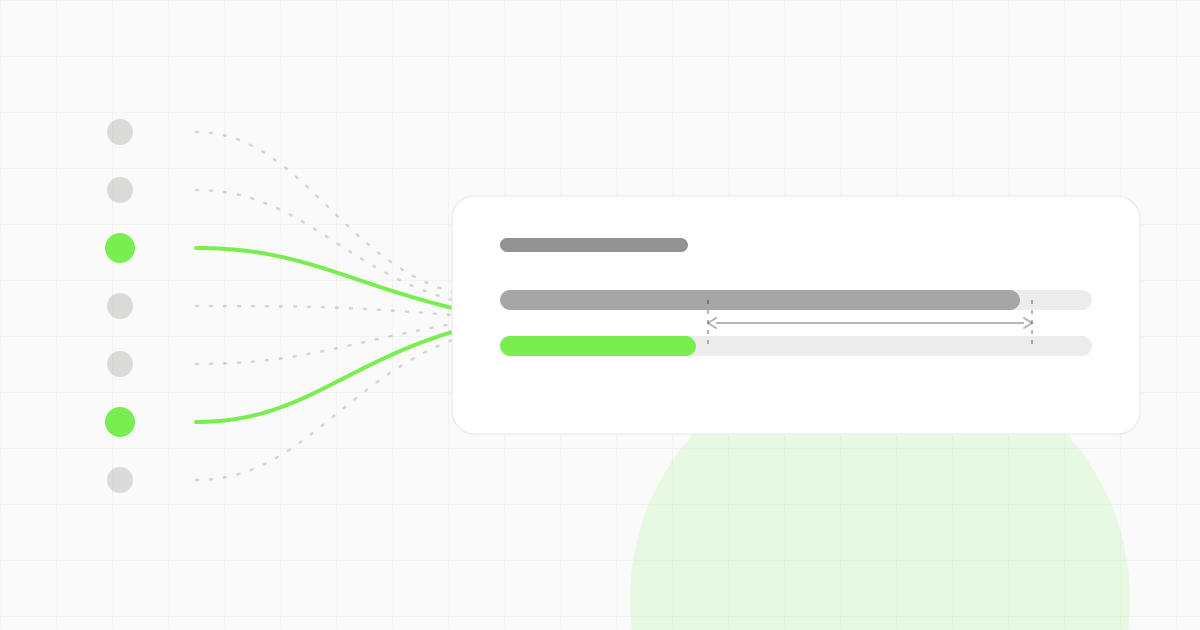
Citation Flow explained: what the metric says about link volume
Citation Flow measures volume, not quality. How the Majestic metric is built, what counts as a good value, which patterns are a warning sign, and which actions follow from it.
How large is a backlink profile, really? Citation Flow helps place that question. It matters because backlinks are still among the signals that can influence visibility and rankings.
The biggest trap sits in reading it in isolation. Judge Citation Flow on its own and you draw wrong conclusions about profile quality fast. What it shows above all is how many external references Majestic recognises for a domain or URL. Whether those references are relevant, trustworthy or editorially sensible has to be checked separately.
What is Citation Flow?
It is a proprietary value from the Majestic tool. Together with Trust Flow it makes up Majestic’s flow metrics. Both give a first orientation on how a backlink profile stands compared with other domains.
Simplified: the more external references Majestic recognises for a domain or URL, the higher the value can come out. Whether those links are high quality, topically fitting or trustworthy is not what the metric judges. One more distinction matters: Citation Flow is not a Google metric and not an official ranking factor.
How Citation Flow is built
The basis is Majestic’s own link index. The tool analyses link relationships between websites and calculates values from them at URL, subdomain and domain level.
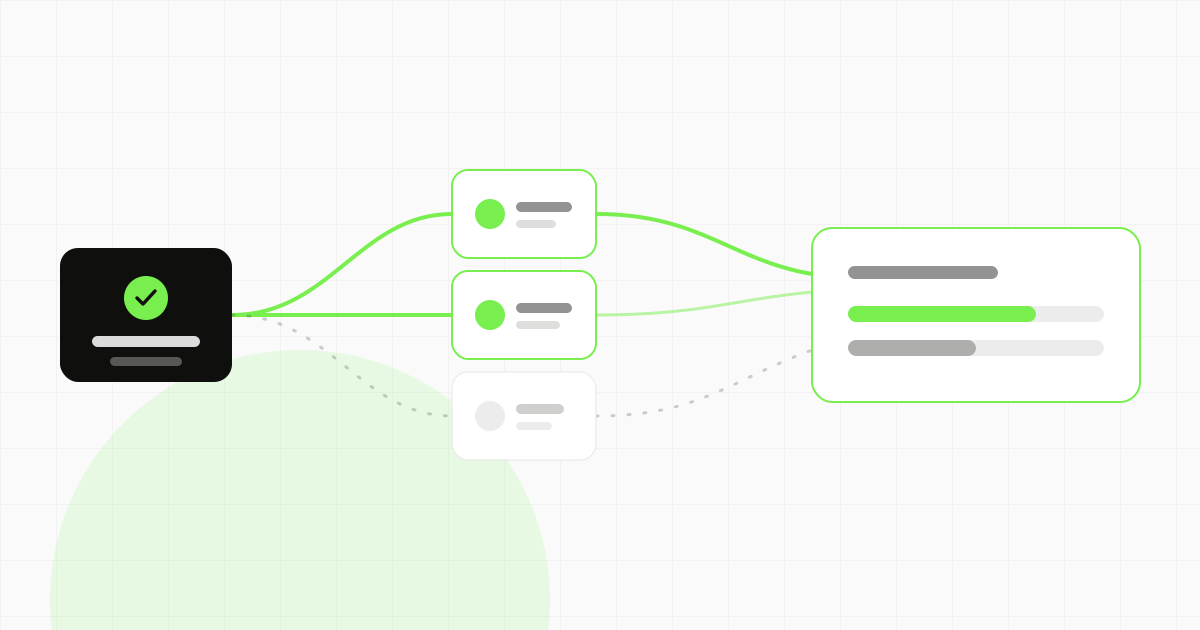
What gets evaluated is how many external references point at a domain, subdomain or URL. On top of that comes how strongly the linking pages themselves sit inside the link graph. The exact calculation stays proprietary and is never fully disclosed. In practice that means the value is a Majestic-internal comparison figure, nothing more.
Citation Flow and Trust Flow compared
Citation Flow shows how large a profile is. Trust Flow estimates how close the link surroundings sit to trusted sources. Topical Trust Flow adds the topical dimension: it shows which subject areas Majestic assigns a profile to.
Metric
What it shows
Strength
Limit
Typical use
Citation Flow
size of the link profile
good for volume and comparison
judges neither quality, relevance nor trustworthiness
competitor comparison, clustering, first prioritisation
Trust Flow
proximity of the surroundings to trust
good for quality and risk signals
says little on its own
publisher evaluation, audit, risk check
Topical Trust Flow
where the trust comes from topically
separates unrelated from fitting sources
says nothing about the placement itself
topical fit, cluster assignment
A clear gap between high Citation Flow and low Trust Flow is not an automatic verdict on quality. It indicates that many links may exist without the surroundings looking correspondingly trusted. A balanced ratio can point the other way, towards an unremarkable profile. How much it says always depends on context.
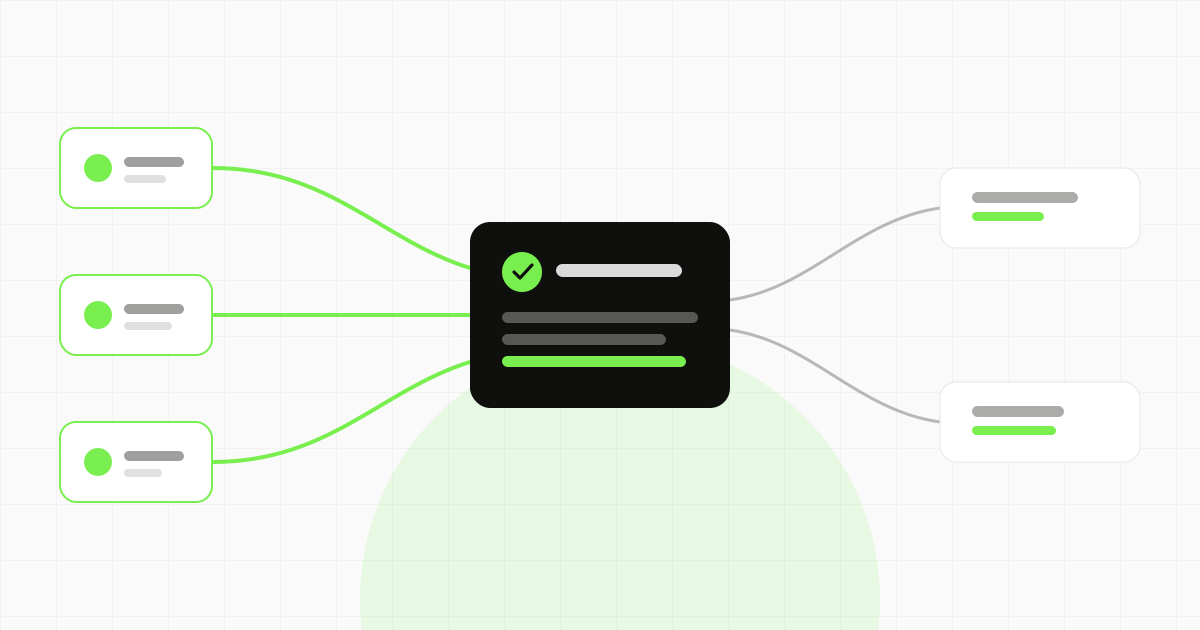
Only the ratio of the two values makes a picture, from unremarkable to worth checking.
What is a good Citation Flow?
There is no universally good value. A high number first means only that Majestic recognises many or strongly connected references. Whether a value is unusual, low or high in comparison depends on five factors:
Market: industry, level of competition, domain age and type of website
Level of assessment: domain, subdomain or individual URL
Majestic context: the ratio to Trust Flow and Topical Trust Flow
SEO context: topical relevance, organic visibility, rankings and traffic
Link context: editorial surroundings, link position and target-page fit
The best reading is relative. Compare the value against the domains that rank for your keywords, against realistic publishers and against other websites in your topic. Only then can you tell whether a profile is unusually large, average or weak.
Why a high value is no proof of quality
A high Citation Flow can also come from many weak, artificial or unrelated links. So it belongs read as a prompt to check, not as proof. These patterns are worth a closer look:
Referring domains unrelated to the topic
Implausible link spikes with no visible trigger
Many sitewide links
Footer links
Links from weak directories
High Citation Flow with low Trust Flow
High Citation Flow with weak organic visibility
The last point in particular is a warning sign: the profile looks large but never reaches a matching presence in the search results. Rather than calling links toxic across the board, it is more useful to talk about unusual or risky patterns. Citation Flow makes those patterns visible, but it does not judge them conclusively.
How to read the Citation Flow value properly
Read it as a first sorting and screening value, not as a final verdict. Three questions lead to a clean assessment:
How does the value compare with the competitors that actually rank?
Does the ratio to Trust Flow and Topical Trust Flow add up?
Which referring domains, link types and link positions drive the value?
Only after that comes the qualitative check: organic visibility, topical fit, link position, link surroundings and editorial context.
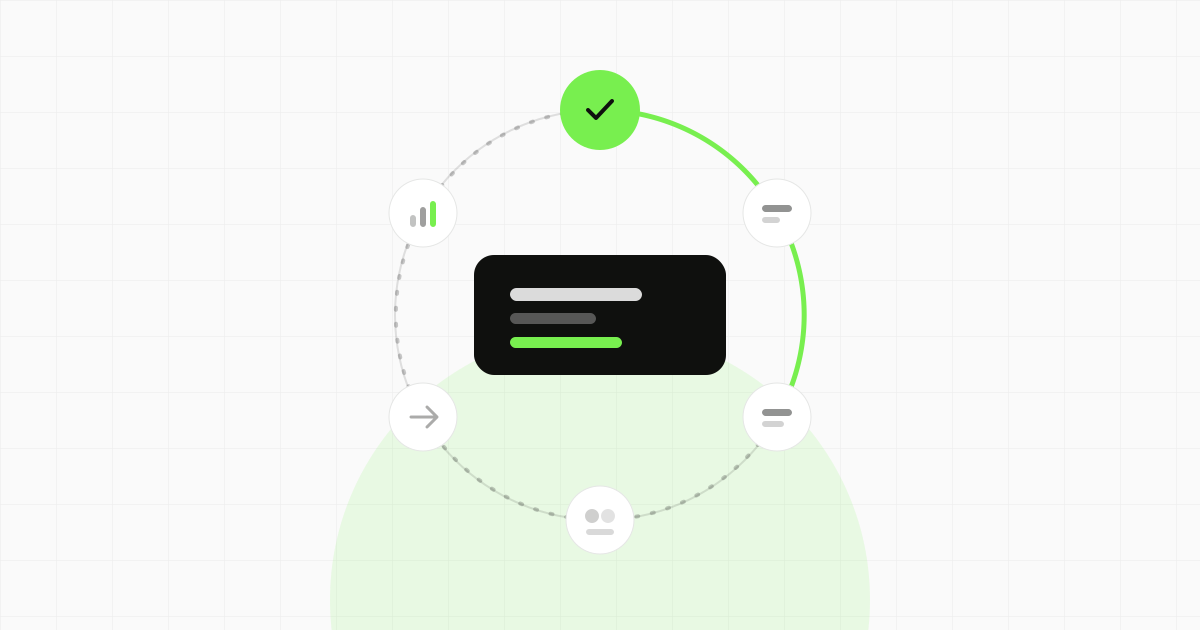
Three checks before a single number becomes the basis for a decision.
Citation Flow day to day
The metric becomes useful when you have to pre-structure many domains, URLs or publishers. It shows which profiles are unusually large and therefore belong in a closer check.
Citation Flow on its own tells you how loud someone is. Only together with Trust Flow does it tell you whether anyone is listening.
David Hahn, Managing Director, GetMentioned
In a domain and backlink audit you use it to sort segments and URLs by the size of their profile. Discrepancies are the most revealing part: where is Citation Flow high while Trust Flow, visibility or topical relevance stay weak? Technical patterns such as many links from a handful of IP ranges or hosting clusters are another prompt to check.
In competitor analysis you spot differences in size faster: which domains in the market collect particularly many references, whether competitors have linked their important money pages more strongly, and where your own profile lacks breadth. MentionIQ takes exactly that comparison off your hands by putting your website, your competitors and your most important keywords side by side.
For publisher evaluation the value works as a first filter but replaces no full check. What decides it on top are Trust Flow, Topical Trust Flow, topical fit, organic visibility, editorial context and target-page fit. So the choice does not hang on a single number, the GetMentioned Score pulls those signals into one rating per publisher.
From Citation Flow to a decision
The value drives action above all as a sorting and prioritisation figure: pre-sort large lists of domains, URLs or publishers and check the most unusual profiles first.
Important for reporting: keep domain values apart from URL values. A domain can hold many incoming links overall while individual money pages barely collect any external references. And if you use Moz Domain Authority alongside it, treat it as a comparison figure, never as an equivalent. Each metric follows its own data base and its own logic.
Signal
What it indicates
Risk
Next step
Priority
Citation Flow
the size and volume of a profile
overrating a high value in isolation
reconcile with Trust Flow, topical fit and visibility
high
Trust Flow
how close the link surroundings sit to trust
reading it in isolation as a verdict on quality
check the ratio against Citation Flow
high
Topical Trust Flow
topical proximity to trust
a high value in the wrong topic
check publisher fit and target-page fit
high
Organic visibility
real SEO relevance
tool data can be incomplete
check rankings, traffic and indexing
medium to high
Editorial context
the quality of a placement
link lists, footer links, obvious sponsored patterns
look at the placement by hand
high
Target-page fit
the strategic use of a link
references point at the wrong target page
check target page, search intent and internal linking
high
Domain versus URL values
where the references actually land
important pages get overlooked
analyse both levels separately
medium
How to improve Citation Flow sensibly
The goal should not be to raise Citation Flow in isolation. A higher value only pays off when a relevant and regularly checked profile sits behind it. It can rise when a domain collects more external references or when the referring pages themselves sit more strongly inside the link graph. What actually helps:
Build relevant backlinks from real websites with stable organic visibility
Plan guest articles, interviews and digital PR placements to fit the topic
Develop linkable assets: studies, data, calculators, guides or checklists
Build continuously rather than in bursts
Review referring domains regularly
Choose link targets strategically
Keep reconciling the profile with Trust Flow, Topical Trust Flow, visibility and link context
The most common mistakes with Citation Flow
In practice the same ones keep happening: the value gets read as a mark of quality or as a stand-in for Google. That leads to inefficient budget and to decisions that are hard to justify later.
Treating Citation Flow as a Google ranking factor
Reading it as a quality metric
Choosing publishers on that value alone
Mixing up URL values and domain values
Ignoring Trust Flow, Topical Trust Flow and topical relevance
Skipping the anchor spread, especially one-sided hard money keywords
Leaving unusual or risky link patterns uninvestigated
Reading Domain Authority, Domain Rating and Citation Flow as identical
Treating a flow gap as proof of a bad profile
Citation Flow and building authority
For authority that lasts the metric alone is not enough. What decides it is the combination of quantitative link signals, trust, topical context, editorial mentions and real organic visibility.
For teams focused on growth the question is therefore an infrastructure that builds backlinks, editorial mentions, trust and market presence systematically. That holds with a view to AI systems too, which draw on the same external signals to place sources.
In closing: a volume signal, not a verdict
Citation Flow shows how large a backlink profile is by Majestic’s reckoning. It describes volume, not quality, relevance or editorial context. It only says something once you read it alongside Trust Flow, Topical Trust Flow, topical relevance, visibility and a manual check.
In our experience it is most useful as a diagnostic and prioritisation value. The most expensive bad buys happen exactly where a single high number replaced the manual check. Anyone who wants to be found for their own topics and named as a source in AI answers needs placements that stand up to more than one metric. At GetMentioned you compare publishers on exactly that and book directly. Create your free account.
Common questions about Citation Flow
What is Citation Flow?
A Majestic metric on a scale of 0 to 100. It reflects the quantitative link signals of a domain or URL and shows how large a backlink profile is by Majestic’s reckoning. On its own it says nothing about quality, trust or topical relevance.
Is Citation Flow a Google ranking factor?
No. It is not an official ranking factor but a Majestic value. It can help with decisions, but it always belongs combined with Trust Flow, Topical Trust Flow, topical relevance, organic visibility and link context.
What separates Citation Flow and Trust Flow?
Citation Flow is quantitative and describes volume. Trust Flow is oriented towards trust and quality. The ratio between the two often gives better hints than either value on its own.
What does the flow gap mean?
A clear distance between a high Citation Flow and a low Trust Flow. That is not proof of a bad profile but a prompt to check: many links exist without the surroundings looking correspondingly trusted.
Is a high Citation Flow good?
Not automatically. It can indicate that a domain collects many external references. But the value can also rise through many weak or unrelated links. What decides it is whether it fits Trust Flow, topical relevance, visibility and editorial context.
Is a high value enough for a good publisher?
No. A rating that holds up also needs Trust Flow, Topical Trust Flow, topical relevance, organic visibility, editorial context, audience and target-page fit.
How do I read the value properly?
By connecting it with further quality and context signals instead of reading it in isolation: Trust Flow, Topical Trust Flow, topical relevance, publisher fit, visibility and price performance. Those are exactly the signals that feed into the GetMentioned Score.
How does Citation Flow feed into the GetMentioned Score?
As one quantitative input among several. The Score combines SEO values, authority, relevance, price performance and likely effect, and deliberately does not rest on a single metric.
Can Citation Flow be improved deliberately?
Optimising a single tool metric is the wrong approach. What makes sense is building fitting publishers, relevant backlinks, brand mentions and digital PR placements. If that produces more relevant references, it can show up in the flow metrics over time.
David has been building link acquisition and digital PR processes since 2016, first as an agency under SEO Galaxy, today as a platform with GetMentioned. He has scaled his own projects from zero to seven-figure monthly traffic and delivered thousands of campaigns for clients. Here he writes about what works in practice, and about what only costs budget.
Your next link does not have to be a blind buy
Compare publishers, SEO data and prices in one place and book the placements that fit.
Trust Flow looks like a decision number, and that is exactly the problem. How the Majestic metric is built, what counts as a good value, and which decisions you can actually take from it.
Link building rarely fails on method, it fails on missing prioritisation. Nine steps from analysis through target pages, assets and publishers to measurement, with a scorecard, a 90-day roadmap and a KPI set.
When rankings stall despite good content, external authority is usually what is missing. Seven steps from prioritising target pages to measuring the effect, with a method comparison, anchor text spread and the KPIs that show what worked.