Tiered link building: what arrives from tier 2 and tier 3
Tier 2 and tier 3 pass nothing on unless their own pages are indexed, and across three levels those failures multiply. Two worked examples show what reaches your own domain, what one surviving reference costs and why a single checked placement gets there in one step.
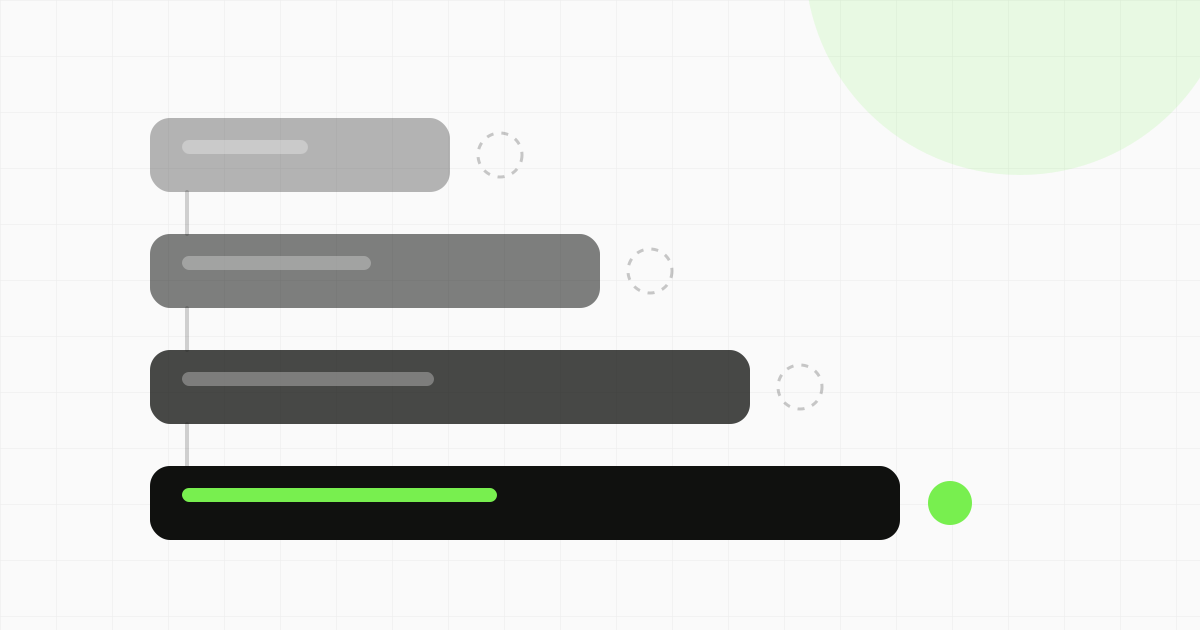
Tiered link building builds references across several levels. Tier 1 points at your own website. Every further level points at the pages of the level above it.
The idea is amplification without touching your own domain. A stronger tier-1 page is meant to pass on more weight.
This article works out what arrives in the index from the lower levels. It shows what a reference costs that reaches your domain.
What tiered link building promises
The technique works in levels. Each level points at the one above.
Tier 1 points at your own website.
Tier 2 points at the pages carrying the tier-1 references.
Tier 3 points at the tier-2 pages.
The promise is the distance from your own domain. The lower levels use sources that would not qualify for a direct reference. Guides name profile pages, forum entries, comments, directories and self-built blogs. The article on free backlinks covers what they achieve.
The second part of the promise is the price. A level-2 page is meant to cost a fraction of a level-1 placement.
Where tiered link building comes from
The technique dates from the era of automated link generation. Software then created profiles, comments and directory entries in bulk.
The forums of that software show how far the automation reached. A user in the GSA Search Engine Ranker forum asked in 2014 whether the program spreads the lower levels evenly across the tier-1 links. The question is about machine distribution.
The layout today's guides pass on comes from that period. What changed since is the inclusion of new pages in the index.
What arrives in the index from levels 2 and 3
A reference counts when the page carrying it sits in the search index. A tier-2 page faces the same condition as a tier-1 page. The article on backlink indexing covers the evidence on new pages. The inclusion rates there diverge widely by type of website. No single rate holds for every page.
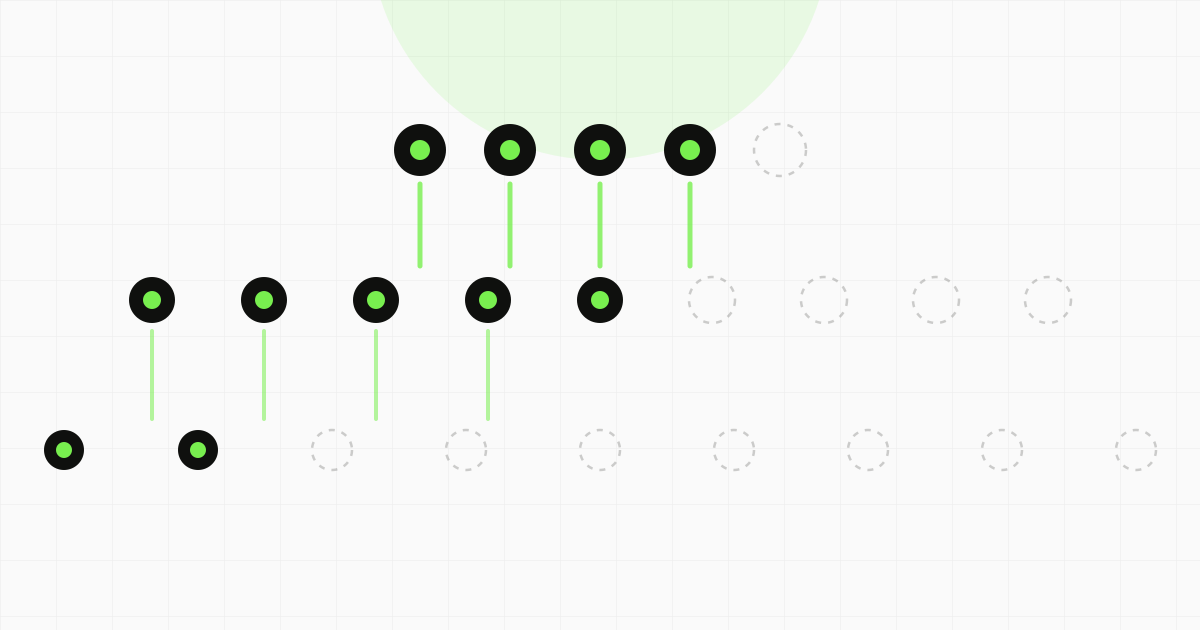
For a three-level chain the condition applies three times over. A tier-3 reference reaches your domain only when all three pages sit in the index. The failures of the three levels multiply.
Example calculation for the failures across three levels
The following calculation is an example and not a measurement. It assumes an inclusion rate of 70 percent, the same for every level. That order of magnitude follows the pre-vetted guest post figure in the article on backlink indexing. It also assumes ten tier-1 placements, ten tier-2 pages per placement and ten tier-3 pages per tier-2 page.
Level
Pages in the example
Chain indexed throughout
References that arrive
Tier 1
10
70 percent
7
Tier 2
100
49 percent
49
Tier 3
1,000
34.3 percent
343
1,110 pages stand at the start of this example. 399 hang on a chain indexed throughout. The remaining 711 have no effect.
Seven references touch your own domain at the end. The lower two levels work only as far as they strengthen those seven pages.
The example calculation in one picture. Each tier multiplies the losses of the tier above it.
What a tier-3 reference passes on across two intermediate steps
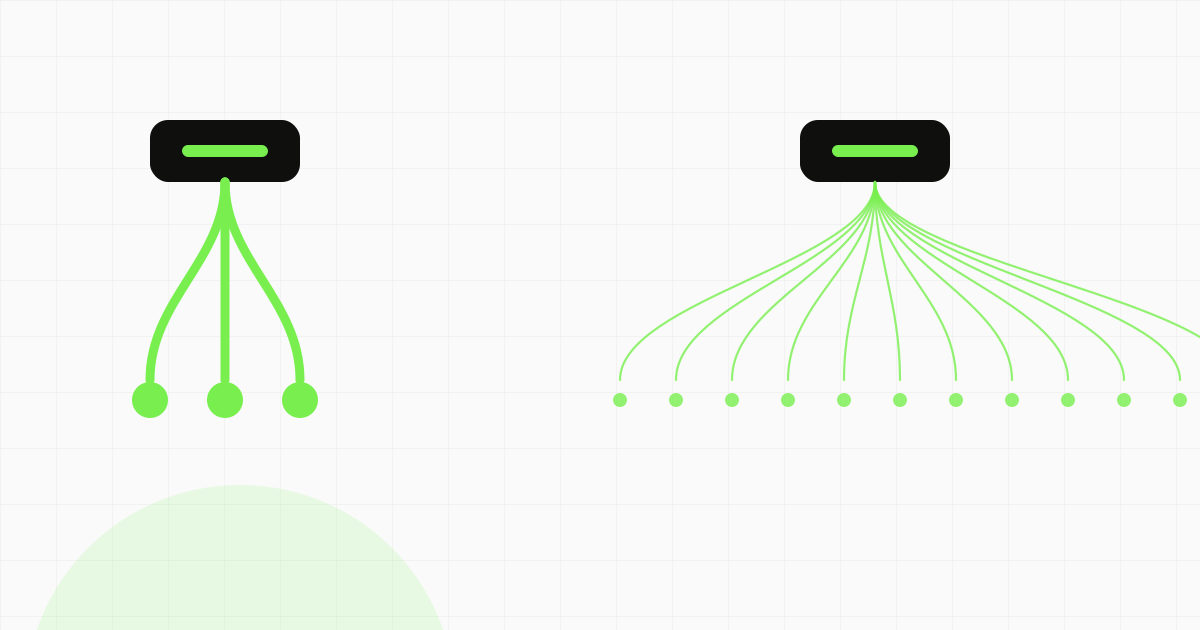
Alongside indexing sits the arithmetic itself. The value a reference passes on is called link equity. A linking page divides its value by the number of references it points out. The damping factor removes a share at every step. The article on link juice explains it.
A tier-3 reference runs through that arithmetic three times before reaching your domain. A tier-1 reference runs through it once.
The starting figure comes on top. A freshly created profile page carries no appreciable value. After two intermediate steps a fraction of that remains.
What is documented about the effect of tiered link building
On 27 August 2026 we searched for a survey measuring the effect of multi-level reference chains. We looked for evaluations with a disclosed sample and method. We found guides from providers who sell the technique themselves.
That leaves the technique without a measurement. Every volume figure for tier 2 in the guides is its author's estimate.
The prices by contrast are documented. They lead to the calculation that matters.
What a surviving reference costs
Vince Nero evaluated a link provider database of more than 500,000 guest post sites for BuzzStream. The article was last updated on 5 August 2026. The average price for a guest post sits at 295 US dollars direct with the publisher. Through an intermediary it is 461 US dollars.
A link insertion is a reference added to an already published article. The same evaluation names 179 US dollars on average.
The evaluation also measures database quality. 1.37 percent of the entries reach a Domain Rating or Domain Authority above 65 with more than 10,000 organic visits a month.
From that follows the calculation for level 2. A tier-2 reference on a page with traffic and ongoing indexing costs about what a tier-1 reference costs. It gets cheaper only where inclusion in the index is open.
Example calculation for the cost per arriving reference
This calculation is an example too and not an offer. It uses the average prices above and the same assumed inclusion rate of 70 percent. Variant one costs 2,950 US dollars, variant two 2,854 US dollars.
Variant
How the budget splits
References to your own domain in the index
Cost per reference
Level 1 only
10 placements at 295 US dollars
7.0
421 US dollars
With level 2
3 placements and 11 link insertions
2.1
1,359 US dollars
In the second variant eleven tier-2 references strengthen three tier-1 pages. Just over five sit on a chain indexed throughout. Only the three level-1 placements touch your own domain.
Time comes on top. Every level needs its own texts, its own coordination and its own index check. In our experience that check is the most laborious part, because it does not bundle across levels.
In the past few years I have not seen one case where anyone checked whether their tier-2 pages were indexed at all, and the number everyone does count, the number of references, says least about the effect.
David Hahn, Managing Director, GetMentioned
How one checked placement achieves the same without intermediate levels
An editorial placement on a domain with organic traffic brings the weight to your website in one step. The arithmetic runs once. The page usually reaches the index within days, because the domain gets taken in continuously.
Four characteristics describe such a placement:
The domain publishes regularly and links new articles internally.
The domain has organic traffic from search.
The reference stands in the body text of an article on the target page's topic.
The article carries few outbound references, so the arithmetic spreads across few targets.
A booking without a check looks like this. An offer promises fifty tier-2 references on aged web 2.0 properties for 200 euros. Proof of delivery is a spreadsheet of addresses and anchor texts, with no column for the index status.
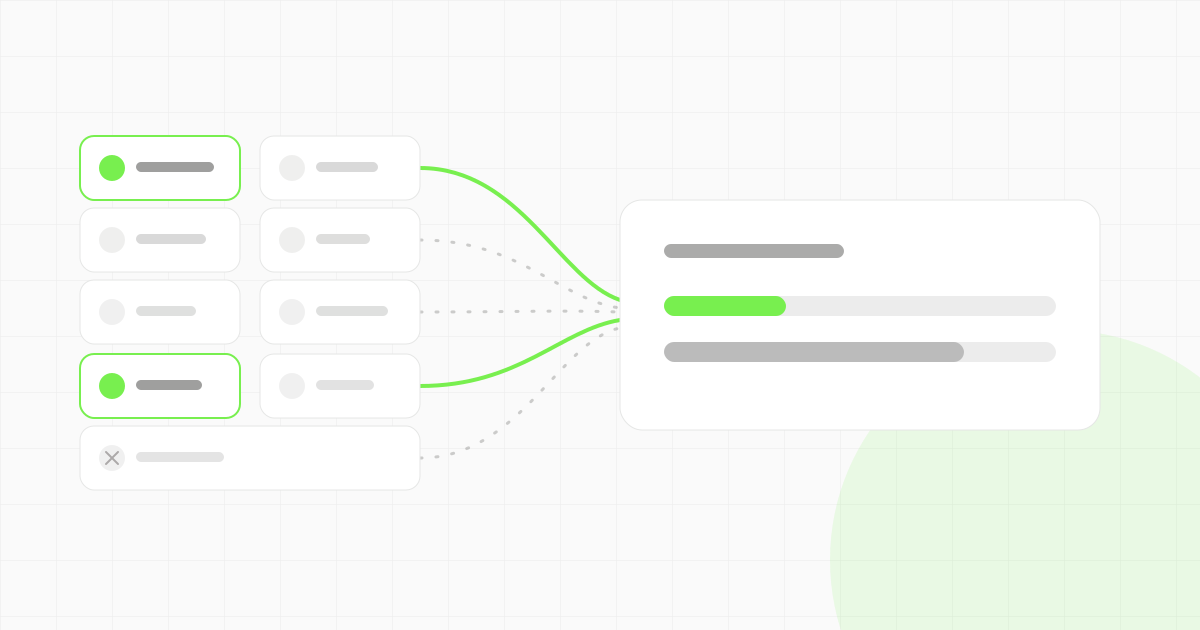
The same decision with a check looks like this. Ten publishers are shortlisted by organic traffic and topic fit. Ten recent articles from each are queried individually in search. Booking goes to those whose articles turn up. The lower levels drop out.
What happens with an existing tier structure
Anyone taking over a grown tier structure asks about dismantling it first. On the lower levels the disavow tool is rarely the answer, because it was built for a different case. The article on the disavow tool describes it.
The workable route runs through the first level. Check which tier-1 placements sit on domains with traffic and stayed in the index. Those keep carrying, and the levels beneath stay untouched.
How we procure placements on one level
GetMentioned is an SEO platform with its own placement marketplace: analysis, content and placements for backlinks, brand mentions and digital PR in one system. Full service in link building, not full-service SEO. We work on one level, and anyone booking through us builds no tier-2 level.
In our marketplace you see topic, organic traffic, SEO data and the GetMentioned Score for every publisher before you book. The price you see in the marketplace is the price you pay.
After publication we check the index status and carry it next to the live status of every booking. If a placement fails within the twelve months of the link guarantee, we replace it.
If you want to hand the selection over, we take it on as a managed engagement. That covers target pages, publisher selection, text, publication and monitoring. MentionIQ evaluates your website, competitors and keywords and proposes suitable publishers.
Conclusion: the level that counts is the first one
Tiered link building spreads effort across levels that never touch your own domain. What arrives hangs on the indexing of every single stage.
The example calculation above ends at seven references out of 1,110 pages. Those seven come about without the 1,100 pages beneath them.
That moves the work from volume to selection. What gets checked is whether a publisher is indexed reliably and whether its topic fits the target page.
Frequently asked questions
What is tiered link building?
Building references across several levels. Tier 1 points at your own website, tier 2 at the tier-1 pages, tier 3 at the tier-2 pages.
What are tier 2 backlinks?
References pointing at the pages that carry your own backlinks. They do not touch your domain.
Does tiered link building still work today?
The effect hangs on the indexing of every stage of the chain. No survey with a disclosed sample measures it.
How many tier 2 links does a tier 1 link need?
No documented figure exists for that. The quantities in guides come from anecdotal reports without a disclosed basis.
What does a tier 2 level cost?
On pages with traffic and ongoing indexing a tier-2 reference costs about what a tier-1 reference costs. Cheaper are only pages whose inclusion is open.
Are tier 2 links the same as internal links?
No. Internal links sit on your own domain, tier-2 links on other people's pages.
What does tier 3 achieve?
In the example calculation above, 343 of 1,000 tier-3 pages sit on a chain indexed throughout. Their weight travels across two intermediate steps and is divided and dampened at each.
David has been building link acquisition and digital PR processes since 2016, first as an agency under SEO Galaxy, today as a platform with GetMentioned. He has scaled his own projects from zero to seven-figure monthly traffic and delivered thousands of campaigns for clients. Here he writes about what works in practice, and about what only costs budget.
Your next link does not have to be a blind buy
Compare publishers, SEO data and prices in one place and book the placements that fit.
You pay for publication, but what counts is the page being in the index. How to sample a publisher's indexing reliability before booking, how long inclusion takes, and what to do when a placement never makes it in.
Link juice is industry jargon for a real mechanism. Where the term comes from, why the distribution has not been steerable for over fifteen years and what counts instead.
Which free link sources carry weight, which only cost time and where the limit sits. With the honest calculation: free means working hours instead of budget.