Domain Rating: what the Ahrefs score measures and what it does not
Domain Rating measures the strength of a backlink profile, calculated from dofollow links. It says nothing about traffic, topic or how Google treats the domain. Why the scale is logarithmic, and which of six common claims hold up.
Domain Rating, or DR, is a metric from the tool provider Ahrefs. It shows the strength of a website's backlink profile on a scale from 0 to 100, measured against the Ahrefs database. (Source: Ahrefs, updated 31 October 2025)
Ahrefs calls DR a less granular version of Ahrefs Rank. That rank orders every domain in the database by the size and quality of its dofollow referring domains. Facebook holds position 1, X position 2, YouTube 3.
One practical point follows. A DR describes a position in a field, never a property of the domain.
How Ahrefs calculates the score
Ahrefs works from the PageRank principle, applied between domains rather than pages. Three rules decide the outcome.
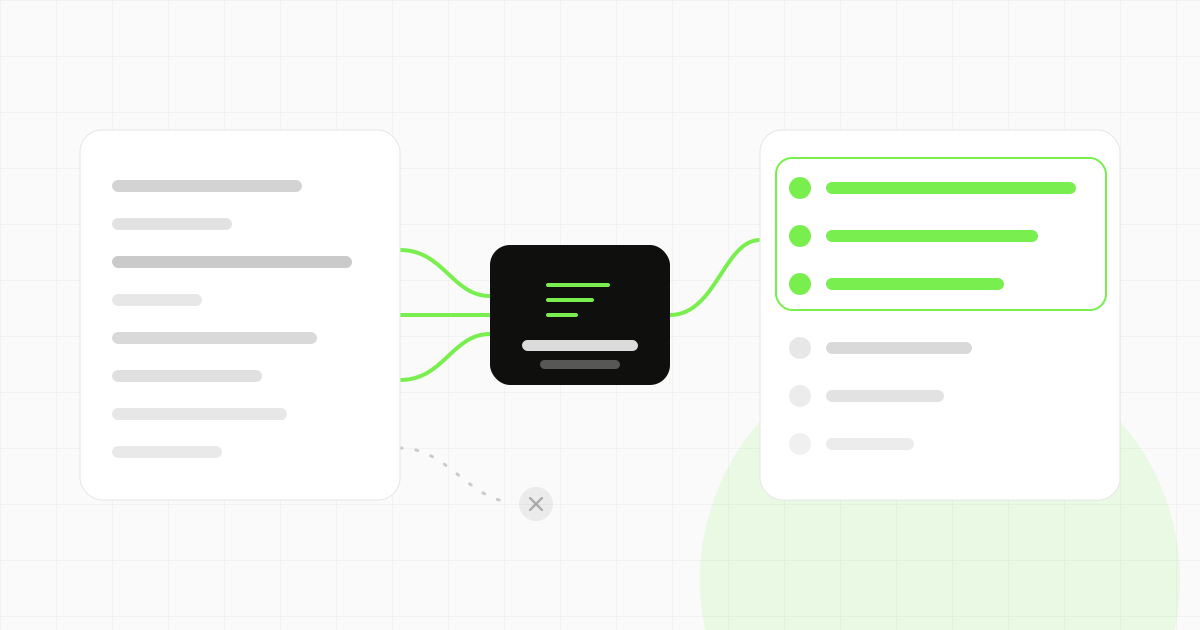
Only dofollow references count
For DR, Ahrefs ignores every reference carrying the nofollow attribute. A website linking to you only through nofollow lifts your DR by zero. More on the attributes in our piece on the dofollow link.
Google draws a finer line. It knows sponsored for paid placements, ugc for user generated content and nofollow for the rest. Google's crawler generally does not follow links marked this way. (Source: Google Search Central, updated 10 December 2025)
The two systems do not line up. DR fails to reflect what Google does with a link.
Every linking domain splits its rating
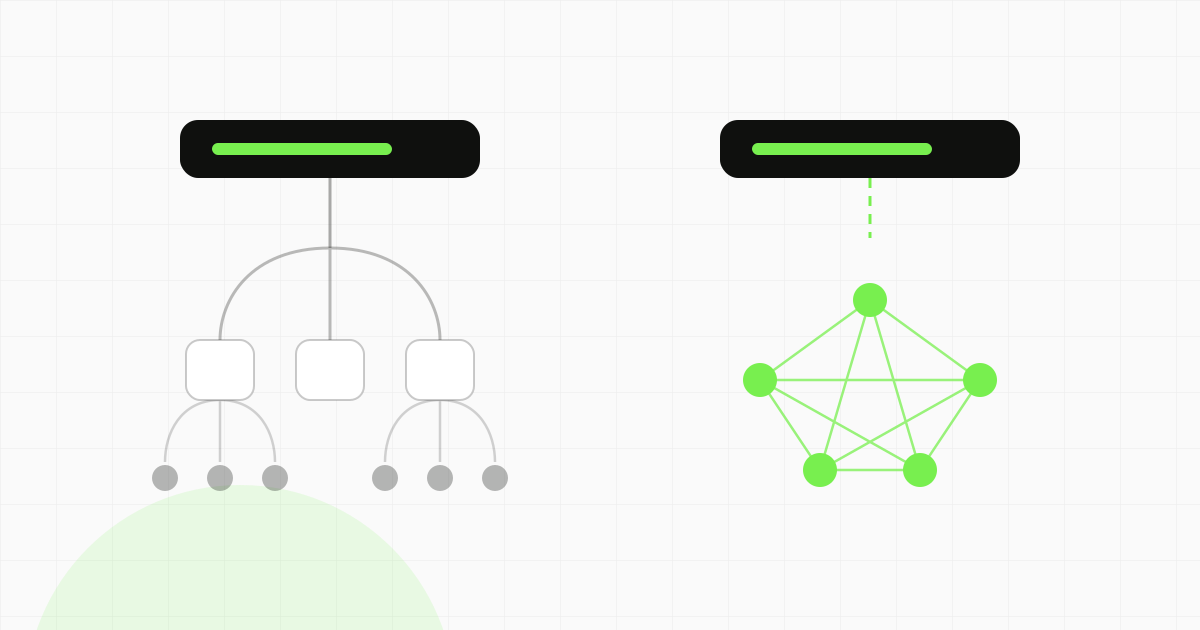
A referring domain splits its rating equally across every domain it links to. Ahrefs gives an example. A DR 10 domain linking to three domains does more for you than a DR 80 domain linking to a million.
A checkpoint for buyers follows. Outbound link volume belongs in the assessment. The pass through is covered in our piece on link juice.
The scale is logarithmic
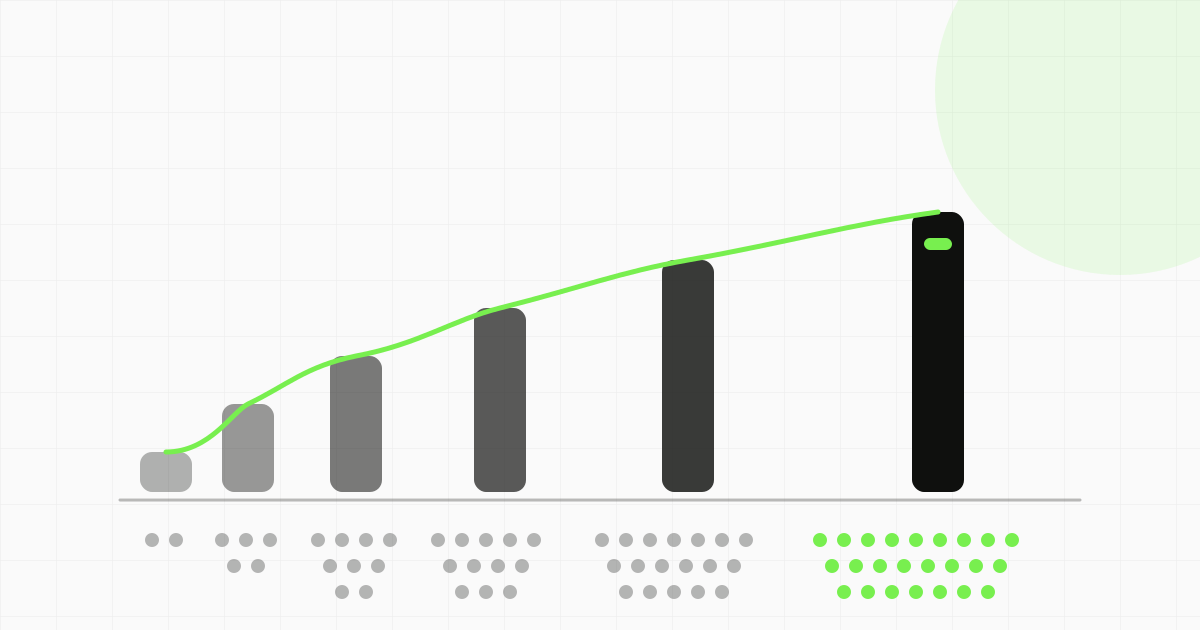
Ahrefs measures DR logarithmically. Moving from 20 to 30 costs less effort than 70 to 80.
At the top end sits a very small group of domains.
Quantity and quality in a link profile
The second rule explains how count and weight interact. Every dofollow reference from a new domain lifts DR. The number of referring domains alone does not settle the value.
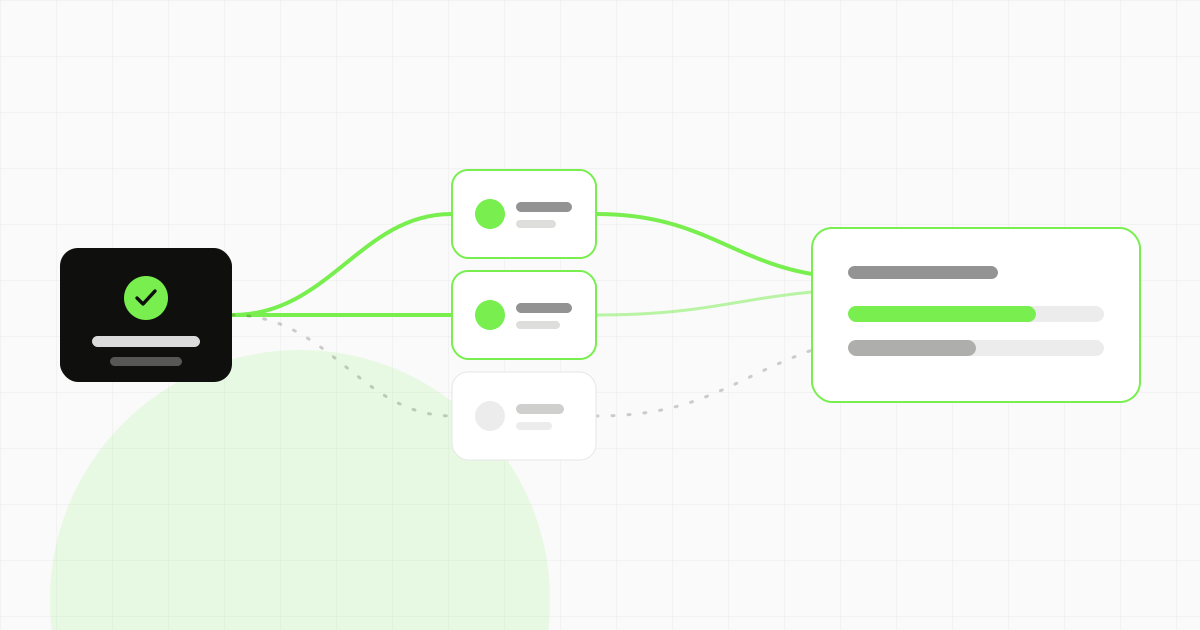
Two factors decide what a single domain contributes. Its own DR, and the number of links it hands out. The influence drops with every further target.
So 50 referring domains that link out sparingly count for more than 50 that link everywhere. Quantity and quality sit inside the same measurement.
The topic of the linking page plays no part here. Topical relevance you check separately. Ahrefs names no minimum number of referring domains.
Why a DR falls without any backlink being lost
When a DR 100 domain gains further references, Ahrefs cannot turn it into a 101. Every other domain slides down a point instead. A decline need not mean a loss.
Ahrefs names three further causes:
The domain loses high quality dofollow references.
An existing dofollow link is switched to nofollow.
Referring domains lose DR themselves and pass on less.
Domain Rating and URL Rating compared
Alongside DR, Ahrefs runs URL Rating, or UR. Both metrics rest on links and measure different things.
Feature
Domain Rating
URL Rating
Level
whole domain
single page
Basis
referring domains
referring pages
Internal links
no effect
counted
One line in the Ahrefs documentation rarely gets quoted. DR correlates with Google rankings reasonably well, and UR does it better.
Keyword rankings are won at page level. In the search engine results, the SERPs, that page shows up and not the domain.
A question for buyers follows. A post on a DR 80 domain can land on a page with almost no links itself. DR says nothing about that.
Where to read Domain Rating
Part of the Ahrefs data is free. The rest belongs to the subscription.
The free Website Authority Checker
Ahrefs lists the Website Authority Checker among its free SEO tools. You enter a domain there, not a single web page.
The free lookup returns three figures:
the Domain Rating of the domain
the backlink count, with its dofollow share in percent
the referring domain count, again with its dofollow share
The tool page speaks of a website's authority in quotation marks. The score it returns is the Domain Rating.
What the free view leaves out
URL Rating is not part of the checker. The list of referring domains, the anchor texts and the value's history sit in the paid Site Explorer.
For a shortlist the free lookup does the job. For a look inside a link profile it does not.
What Domain Rating says about traffic
The documentation on the calculation mentions neither search traffic nor topical fit. Ahrefs lists both separately, as checkpoints when picking a publisher.
A connection between the two exists all the same.
The numbers from 344,956 websites
Ahrefs analysed anonymised Search Console data from 344,956 websites. Published is the median of monthly organic clicks by DR band. (Source: Ahrefs, 23 June 2026)
DR band
Median clicks per month
Websites in sample
0–10
9
165,663
40–50
831
19,291
60–70
3,630
7,777
80–90
50,292
1,534
Ahrefs adds the caveat. DR is a proxy for the authority that wins traffic, and no dial you turn to get it.
Why the median decides nothing about a single domain
The median describes the middle of a group. It does not apply to one domain.
In the DR 40 to 50 band the median sits at 831 clicks and the mean at 15,952. That factor of 19 shows the spread inside one band. A DR 45 domain may draw 50 visitors a month or 50,000.
The difference from Domain Authority
Domain Authority comes from Moz and answers a different question. A learning model predicts how likely a domain is to rank. DR computes the link graph and predicts nothing.
The values do not convert into one another. What sits behind the Moz number is covered in our piece on Domain Authority.
Six common claims about Domain Rating, fact checked
Claims about this metric circulate widely, and the Ahrefs documentation settles most. We looked up six.
Claim
Verdict
Nofollow links do not count
holds. Ahrefs ignores them for DR
Google does not use DR as a ranking factor
holds. Ahrefs sees no evidence for it
DR judges neither link spam nor traffic
holds. Ahrefs calls it no measure of legitimacy
A DR of 40 and up signals solid authority
fails. Ahrefs names no threshold at all
Technical SEO improves your DR
fails. Only dofollow references count
Guest posts raise your DR
partly holds. Any new dofollow reference lifts the value
Two of those verdicts deserve a paragraph of their own.
The threshold of 40 has no source
Ahrefs answers the question about a good DR head on. No fixed value can be given, because DR is relative. The rule of thumb is comparison with similar websites.
Cutting a publisher list at DR 40 means using a number with nothing behind it. What works is a floor from your own competitive field.
Technical SEO does not move Domain Rating
Load time, site structure and navigation play no part in the DR calculation. Only dofollow references from other domains count. Technical search engine optimisation moves rankings, and it leaves DR where it was.
How to spot an inflated Domain Rating
The three rules also explain how a DR gets lifted artificially. Plenty of dofollow references from domains that barely link out produce a high value. Ahrefs checks neither legitimacy nor spam. The value says nothing about how trustworthy a domain is.
Five signals point to a mismatch:
A high DR with very little organic traffic. The median for the band exposes the gap.
Referring domains that draw no traffic themselves.
A link profile built up within a few months.
Many references from unrelated subject areas.
A website that links in every direction and covers every topic.
The reverse does not hold. A low DR is no spam signal, because new websites without backlinks carry one too.
How to use Domain Rating when buying a placement
DR answers one question out of several. In our experience teams move faster once they keep the number to the shortlist.
Set the floor from your own competitive field.
Add the UR of the page the placement will sit on.
Keep the domain's organic traffic next to it.
Check topical proximity to your target page.
Look at how many domains the website links out to.
Ahrefs recommends a similar list and adds that quality should never rest on the authority score alone. Working through a link profile is covered in our piece on backlink analysis.
What belongs on the checklist next to Domain Rating. The calculation rules and traffic figures come from the Ahrefs documentation.
A DR filter saves time on the shortlist. The decision here comes down to topic, traffic and the page the article finally sits on.
David Hahn, Managing Director, GetMentioned
What to expect from Domain Rating
Three sentences remain. Domain Rating measures backlink profile strength, built from dofollow references. The value is relative and describes a position in a field. It says nothing about traffic, topic or how Google treats the domain.
For the shortlist the number works. The decision needs traffic, topical fit and the target page of the placement alongside it.
Frequently asked questions
What is Domain Rating?
An Ahrefs metric from 0 to 100. It shows the strength of a domain's backlink profile, computed from dofollow references.
What counts as a good Domain Rating?
Ahrefs names none and writes that a DR of 30, 50, 60 or 70 cannot be called good. Compare against similar websites instead.
Is Domain Rating a Google ranking factor?
No. Ahrefs states itself that there is no evidence search engines use DR as a ranking factor.
What is the difference between Domain Rating and URL Rating?
DR rates the whole domain, UR a single page. Internal links count only for UR. According to Ahrefs, UR correlates better with Google rankings.
Do nofollow links count towards Domain Rating?
No. For DR, Ahrefs ignores every backlink and every referring domain carrying the nofollow attribute.
Why did my Domain Rating drop although I lost no backlinks?
Because the scale is capped at the top. When other domains gather more references, the rest slide down.
Has Ahrefs changed the Domain Rating calculation since 2024?
There is no evidence for it. Several agency blogs report a recalculation on 26 September 2025. The Ahrefs changelog for that month lists none, and the February 2026 help article on DR declines names four causes, none an algorithm change.
David has been building link acquisition and digital PR processes since 2016, first as an agency under SEO Galaxy, today as a platform with GetMentioned. He has scaled his own projects from zero to seven-figure monthly traffic and delivered thousands of campaigns for clients. Here he writes about what works in practice, and about what only costs budget.
Your next link does not have to be a blind buy
Compare publishers, SEO data and prices in one place and book the placements that fit.
The visibility index sums up a domain's Google rankings, weighted by search volume and click probability. What the number says, why it is a zero-sum game and what it stopped showing once AI Overviews arrived.
How to evaluate a link profile: which data you need, which metrics say something, how the competitor comparison works and what comes out as a work list.
Trust Flow looks like a decision number, and that is exactly the problem. How the Majestic metric is built, what counts as a good value, and which decisions you can actually take from it.