A backlink works in four steps: discovery, attribution, evaluation, effect. What happens technically, what decides its weight and what a link explicitly does not do.
A backlink works because a search engine follows the reference from one website to another, reads it as a recommendation and passes part of the linking site's trust on to the page it points to. What happens behind the scenes is a chain of four steps: discovery, attribution, evaluation, effect.
This article explains that chain. What backlinks actually are and which types exist is covered in What are backlinks?. Here the focus is on the process itself.
What Happens When a Link Goes Live
To make the chain tangible, here is one example we will follow all the way through: a small coffee roastery runs a website with a page about brewing filter coffee. A well-known food magazine publishes an article about brewing methods and links to that page.
Weeks pass between publication and visible movement, because every step waits for the one before it.
Step 1: The Search Engine Discovers the Link
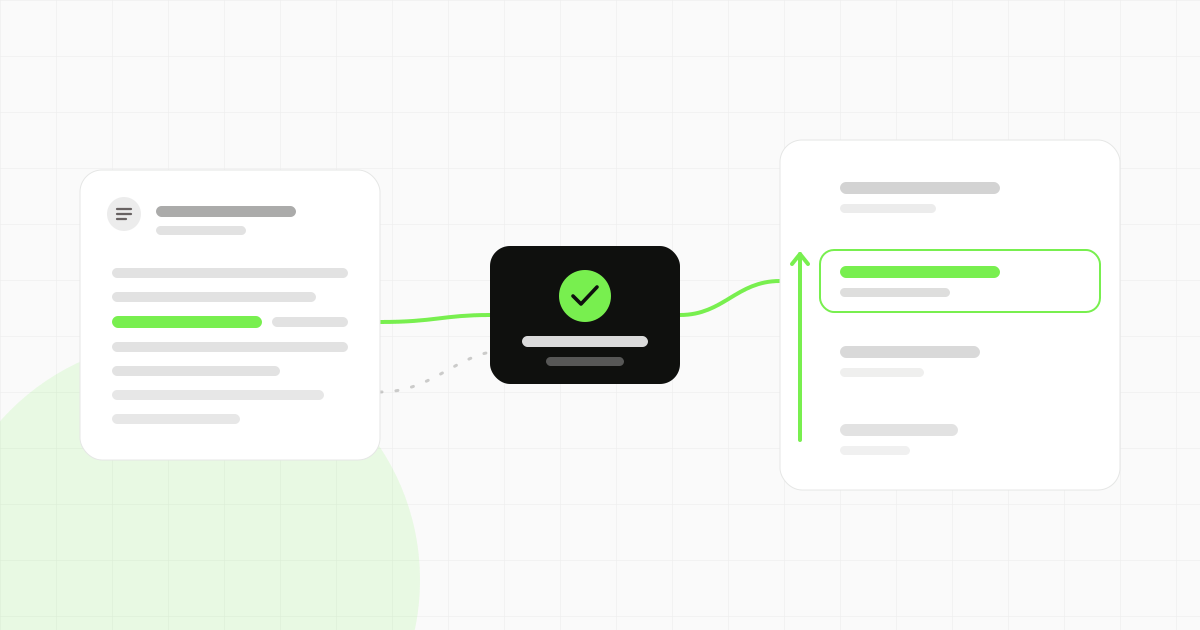
Search engines explore the web with programs called crawlers. A crawler opens a page, reads the content and records every link it finds. When it visits the food magazine's article, it finds the reference to the roastery.
That is the first practical benefit of a backlink, and it is often overlooked: it is a route by which a page gets found in the first place. A website with no incoming links has to be discovered some other way, for example through a sitemap.
Step 2: The Link Is Attributed to the Target Page
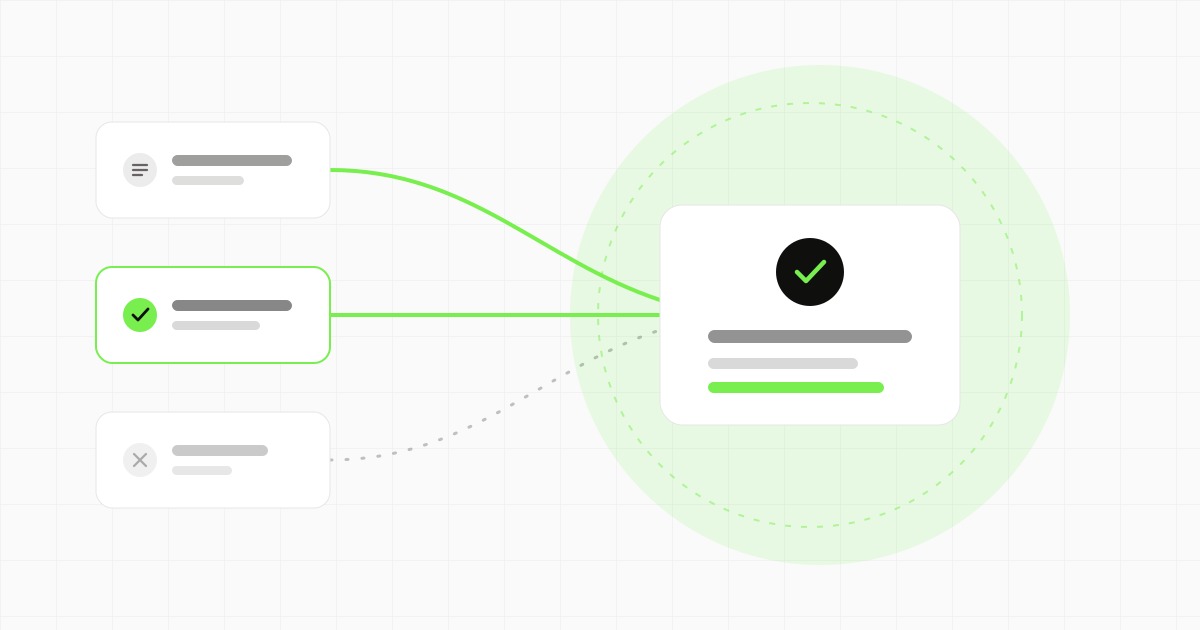
The search engine does not only store that a link exists. It also stores where the link comes from and what it sits next to. From now on, the roastery's page carries this piece of information: an article about brewing methods in a food magazine points here.
The collection of all incoming references is called a link profile. It grows over time and changes as links appear or disappear.
Step 3: The Link Is Evaluated
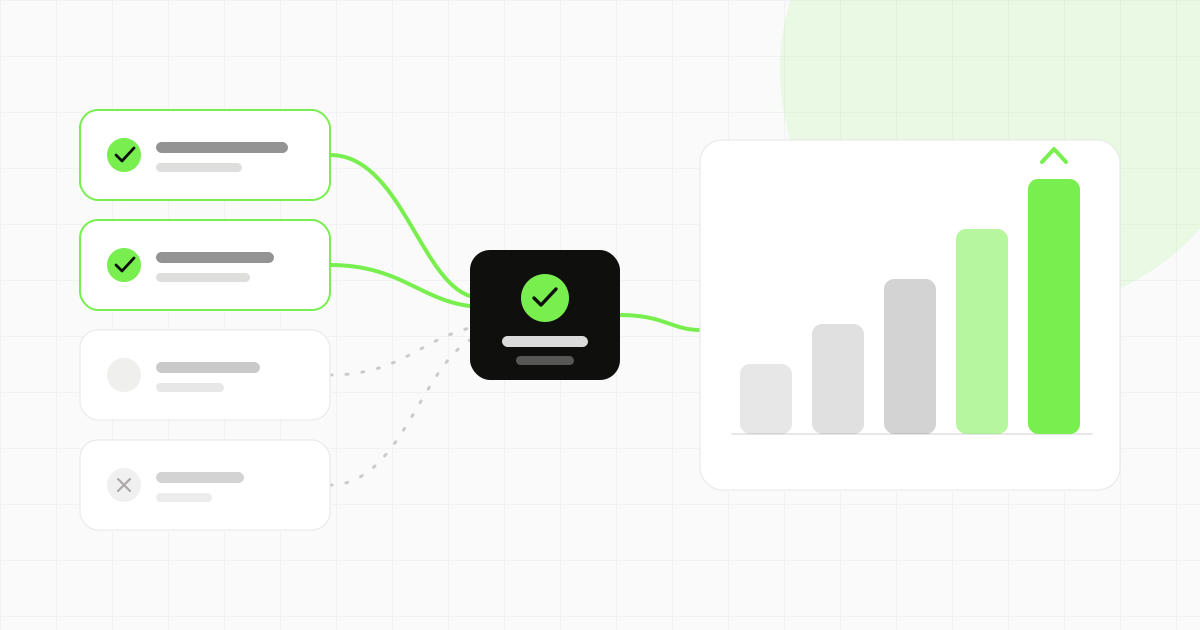
Now it becomes clear how much the reference is worth. Among other things, the search engine looks at how trustworthy the food magazine itself is, whether the topic matches the target page, where in the article the link sits and which text was linked.
A link inside the running text of a topically relevant article is read differently from one in a list of links at the bottom of the page. Both are backlinks, but they say different things.
Step 4: The Link Affects Rankings
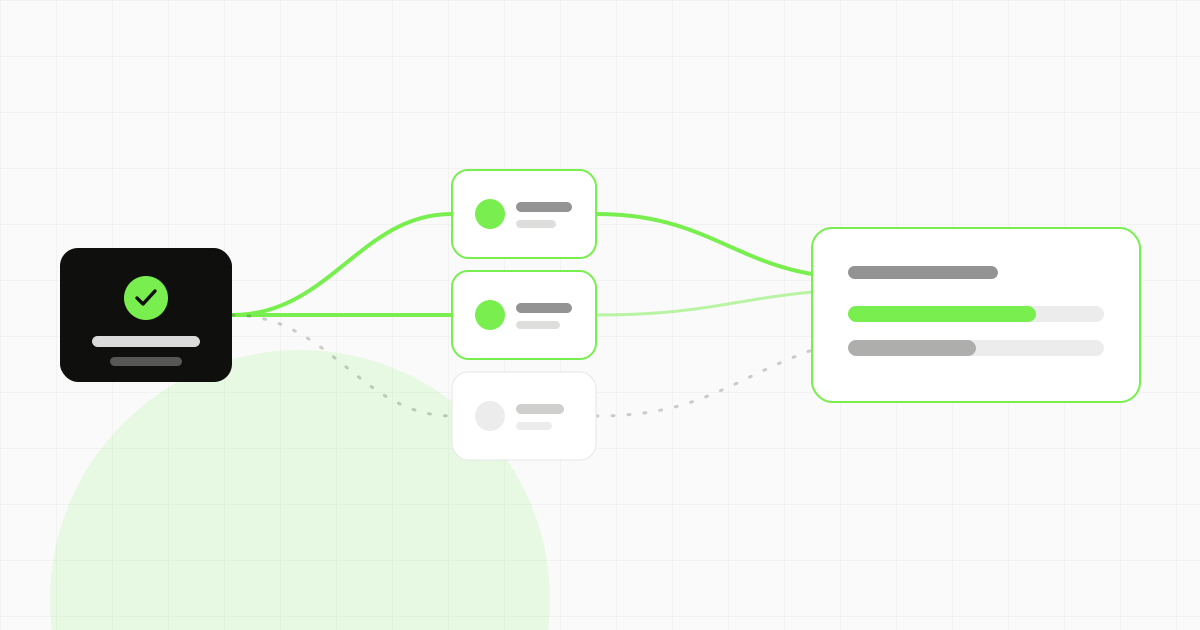
Many evaluations like this add up to an overall picture of how reliable a page is within its topic. That picture feeds into the order of search results, together with many other factors such as content, freshness and the technical quality of the page.
The sequence matters: a link does not take effect immediately, only after the search engine has found it, filed it and assessed it. Between publication and visible movement, you are usually looking at weeks.
How Google Reads the Link
Four characteristics determine how a reference is interpreted.
A link is a statement about a page, not a credit that accumulates.
The Anchor Text
The anchor text is the visible, clickable text of the link. If it reads "guide to brewing filter coffee", the search engine gets a hint about the topic of the target page. If it reads "here", that hint is missing.
That does not mean every link should contain your preferred keyword. A link profile that has grown naturally contains brand names, whole phrases and vague wording, all mixed together. A profile in which a striking number of links carry the same term is a pattern that does not appear on its own.
The Context Around the Link
Search engines do not only read the link, they read the text around it. A reference in the middle of a paragraph about brewing temperatures sits in a different context than the same reference inside a list of partner sites.
The Position on the Page
A link in the editorial body of an article carries more weight than one in the footer or the sidebar. The reason is straightforward: whatever sits in the navigation or the footer appears on every page, so it says nothing about one particular piece of content.
The Link Attributes
Links can be marked with attributes that tell the search engine how to treat them:
nofollow: the link should not be counted as a recommendation
sponsored: the link comes out of a paid or promotional relationship
ugc: the link comes from user-generated content such as a comment
If no such attribute is present, the link counts as a regular reference. For paid placements, labeling is the clean route, because it creates transparency instead of obscuring a relationship.
Most people overestimate what a single link does, and underestimate what a hundred of them do over three years.
David Hahn, Managing Director, GetMentioned
The Path of a Backlink From Start to Finish
Let's stay with the roastery. The article in the food magazine goes live on a Monday. Here is what follows:
The crawler visits the magazine regularly because it is updated often. It finds the new article within a few days.
It follows the link and opens the roastery's page. If that page was new, the search engine knows about it from now on.
The reference is added to the roastery's link profile, together with anchor text, surrounding context and origin.
Because the magazine fits the topic and is itself regarded as trustworthy, the reference carries weight.
Over the following weeks the page's position in search results can improve, provided the content itself matches the search query.
That last point is the decisive one. The link strengthens a page that is already a plausible answer. It does not make a page suitable when it isn't.
What a Backlink Does Not Do
This is where most of the misunderstandings sit.
Backlinks Do Not Add Up to a Score
Backlinks are not added up like credit. There is no number at which a page lands in first place. Metrics such as Domain Rating or Trust Flow, which create exactly that impression, come from tool providers and not from Google. They estimate, they do not measure.
Weeks pass between publication and measurable change, sometimes months. In our experience this produces the most common false conclusion of all: a team builds links, sees nothing after two weeks and decides that more links are needed. In reality, only the time frame was too short.
A Single Strong Link Rarely Carries a Site
A prominent mention is a good start, but it is not a foundation. Reliable results come from recurring signals out of relevant topic areas, not from one lucky hit.
Links Do Not Fix a Weak Page
If the target page does not answer the searcher's question, references change nothing about that. They only amplify what is already there.
Why Some Links Do More Than Others
Characteristic
Stronger effect
Weaker effect
Topic
matches the target page
unrelated subject
Placement
in the editorial text
in the footer or link lists
Publication
own editorial team, real audience
publishes about anything and nothing
Anchor text
describes the content
always the same target keyword
Context
few, selected references
outbound links dominate the page
The most important point is in the last row. A page that consists mostly of references pointing outwards says very little, no matter which metrics are listed next to it.
What the Backlink Mechanics Mean for Your Own Website
Understanding the mechanics leads to three practical conclusions:
Decide first which pages actually need external references. Not every page needs backlinks, but pages with business value and competition do.
Give people a reason that justifies a link. Data, a tool, an assessment, a story.
Select suitable publications instead of as many as possible.
The third point is where most people who start on their own get stuck: researching suitable publications takes time, and without comparable data the decision comes down to gut feeling. GetMentioned is a placement marketplace for backlinks, brand mentions and digital PR. You can select suitable publishers, compare SEO data and prices, book placements directly and document publications centrally.
Conclusion: source, topic and target page must match
Backlinks work as a recommendation. A search engine discovers the reference, attributes it, evaluates it in context and lets it feed into an overall picture. What decides the outcome is whether source, topic and target page fit together. Once you understand that, you stop asking how many links you need and start asking which ones.
Frequently asked questions about how backlinks work
How do backlinks work, simply explained?
A search engine follows the reference from one website to another and reads it as a recommendation. The more trustworthy and topically relevant the linking page, the more weight that recommendation carries.
How long does it take for a backlink to work?
Usually several weeks. The search engine first has to find the link, attribute it and evaluate it before it can affect a position.
How does Google find a new backlink?
Through crawlers that visit websites regularly and record every link they see. Frequently updated sites get visited more often, so new links there are found more quickly.
What is anchor text and why does it matter?
The anchor text is the visible text of the link. It gives the search engine a hint about the topic of the target page. However, when many links carry the same target keyword, the result is an unnatural pattern.
What does nofollow mean?
It is an attribute with which a site operator signals that a link should not be counted as a recommendation. Such links can still bring visitors and contribute to a brand's visibility.
Does every backlink count the same?
No. Topic, placement, the trustworthiness of the publication and the context around the link determine its weight.
How many backlinks does a page need to rank?
There is no fixed number. What matters is the gap to the pages that are already visible for the same search query.
Can backlinks also do harm?
Recognizably manipulative patterns can be devalued, for example mass placements on unrelated sites. A single ill-fitting reference, on the other hand, usually has no consequences.
What happens when a backlink is removed?
The effect falls away as soon as the search engine notices that the link no longer exists. That is why checking existing references is part of ongoing work.
Do mentions without a link have an effect too?
For classic search engines only to a limited extent. In AI search systems, however, being named in the text an answer is built from counts, even without a clickable reference.
David has been building link acquisition and digital PR processes since 2016, first as an agency under SEO Galaxy, today as a platform with GetMentioned. He has scaled his own projects from zero to seven-figure monthly traffic and delivered thousands of campaigns for clients. Here he writes about what works in practice, and about what only costs budget.
Your next link does not have to be a blind buy
Compare publishers, SEO data and prices in one place and book the placements that fit.
Backlinks are digital recommendations. What they are, how search engines weigh them, which types exist and why good content alone is rarely enough. With numbers from two analyses.
How search engines and AI systems weigh links, which methods exist, what link building costs and how paid placements should be judged. The overview, with pointers into the detail.
Trust Flow looks like a decision number, and that is exactly the problem. How the Majestic metric is built, what counts as a good value, and which decisions you can actually take from it.